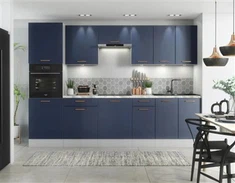


Brushed Stainless Steel Kitchen Cabinets
Size: customized
Color: as picture
Service: OEM & ODM
Description
Technical Parameters
brushed stainless steel kitchen cabinets

⭐ Key Advantages of Brushed Stainless Steel Cabinets
Durability & Resistance
Heat/Moisture Resilience: Withstands temperatures up to 500°C and resists humidity, warping, and corrosion-ideal for kitchens near dishwashers or stoves .
Scratch Resistance: The brushed finish hides minor scratches and fingerprints better than mirror-polished alternatives .
Hygienic Properties
Non-Porous Surface: Prevents bacterial growth and repels stains, oils, and odors. Clean with mild soap and water .
Food-Safe Material: Complies with commercial-grade hygiene standards (e.g., SUS304 steel) .
Modern Aesthetics
Industrial Elegance: The matte metallic finish suits contemporary, minimalist, or industrial kitchens .
Light Enhancement: Reflects ambient light, brightening smaller spaces .
⚠️ Potential Drawbacks & Mitigations
Fingerprints/Smudges:
Mitigation: Brushed finishes minimize visibility; wipe weekly with vinegar-water solution .
Dents/Scratches:
Mitigation: Avoid heavy impacts; choose thicker gauges (≥1.2mm) for added durability .
Limited Color Options:
Mitigation: Pair with warm accents (wood countertops, brass hardware) to soften the industrial feel .
Higher Cost:
Budget Tip: Opt for modular units (e.g., IKEA VÅRSTA) or stainless fronts over solid cabinets .
🎨 Design Integration Tips
Color Pairings
Warm Contrasts: Combine with wood countertops or beige backsplashes for balance .
Monochromatic Schemes: Pair with gray quartz or concrete counters for a cohesive industrial look .
Hardware & Textures
Handles: Match with matte black or brass pulls to add warmth .
Mixed Materials: Use glass upper cabinets or open shelving to break visual monotony .
Lighting:
Install under-cabinet LEDs to highlight the brushed texture and counter workspace .
🔧 Installation & Maintenance Guide
Installation
Professional Help Recommended: Heavy weight and precise alignment require expertise .
Modular Options: Brands like IKEA offer DIY-friendly stainless units .
Daily Care
Clean with microfiber cloth + pH-neutral cleaner; avoid bleach or steel wool .
Longevity Tips
Lubricate hinges quarterly with silicone spray .
Repair scratches with specialized stainless steel polish .
💰 Cost & Supplier Options in Canada
| Type | Price Range (CAD) | Recommendations |
|---|---|---|
| Modular Units | 200–600/cabinet | IKEA VÅRSTA |
| Custom Cabinets | 5,000–15,000+ | JW Stainless, Great Lakes Stainless |
| Refacing Doors Only | 1,000–3,000 | Local fabricators (e.g., Dongji) |
🌍 Sustainability & Climate Adaptability
Eco-Friendly: Made from recycled materials and fully recyclable .
Climate Resilience: Resists mold in humid areas (e.g., coastal Canada) and cracking in freezing temperatures .
Final Recommendations:
For residential kitchens, prioritize SUS304-grade steel with brushed finishes to balance cost and durability
In high-traffic or commercial spaces, invest in reinforced frames (≥1.2mm thickness) and soft-close hinges .
Brushed stainless steel cabinets deliver timeless functionality for modern kitchens-pair their industrial edge with natural textures for a space that's both sleek and inviting.
how much do stainless steel kitchen cabinets cost

The cost of stainless steel kitchen cabinets varies significantly based on material grade, size, design complexity, brand, and location. Below is a detailed breakdown synthesizing global pricing data from industry sources:
📊 Key Price Factors
Material Grade & Thickness
304 Grade (Food-Grade): Most common; offers corrosion resistance. Prices range $150–300 per sq ft (₹1,200–2,500/sq ft in India).
316 Grade (Marine-Grade): Superior corrosion resistance (ideal for coastal areas). Costs 20–30% more than 304.
430 Grade: Budget option but less durable. Prices start at $100–150/sq ft.
Thickness: Cabinets with **≥1.2mm steel** cost 15–25% more than thinner options (0.8–1.0mm).
Size & Layout Complexity
Small Kitchens (100–150 sq ft): $5,500–8,000 (₹5.5–8.25 lakh in India).
Medium Kitchens (150–250 sq ft): $8,000–14,000 (₹8.25–13.75 lakh).
Large/High-End Custom: $15,000–30,000+ (₹20+ lakh).
Design & Customization
Basic Modular Units: $200–600 per cabinet (IKEA VÅRSTA).
Custom Finishes: Brushed/matte textures add 10–20%; color coatings (e.g., embedded hues) increase cost by 25–40%.
Hardware: Soft-close hinges/pull-outs add $50–150 per cabinet.
🌍 Regional Price Comparisons
| Region | Price Range (Per Unit) | Notes |
|---|---|---|
| China | ¥5,000–30,000 ($700–4,200) | Luxury brands cost 2–3× more. |
| India | ₹1,200–15,000/sq ft ($15–185) | Custom designs exceed ₹20,000/sq ft. |
| North America | $800–3,000/linear meter | Professional install adds 15–25%. |
| Australia | AU$200–1,400/cabinet | Commercial-grade up to AU$8,400. |
💰 Additional Costs to Consider
Installation: $1,000–5,000+ for professional fitting, especially for integrated sinks or curved designs.
Accessories: Pull-out trays, spice racks, or lighting add $500–2,000.
Shipping & Duties: Importing from China/India incurs 15–25% customs fees.
💎 Budget-Saving Tips
Hybrid Designs: Use stainless steel only for lower cabinets/appliances; pair with wood uppers.
Refacing: Refinish existing cabinets with stainless steel doors ($1,000–3,000).
Modular Kits: IKEA or Alibaba wholesale options cost 40–60% less than custom.
⚠️ Limitations & Trade-Offs
Dents/Scratches: Lower-grade steel (430) shows damage easily; repair costs $50–200/panel.
Fingerprints: Matte finishes reduce visibility but cost 10–15% more than glossy.
✅ Best Value Recommendations
Residential Use: 304-grade modular units (e.g., IKEA VÅRSTA) + DIY install.
High-Humidity Areas: 316-grade cabinets with sealed edges.
Luxury Projects: Custom SUS304 with integrated sinks ($8,000–15,000+).
Pro Tip: "Request samples of steel thickness and finish before ordering. For large projects, negotiate bulk discounts with suppliers "
Stainless steel cabinets offer unmatched durability and hygiene but require strategic budgeting. Prioritize material quality and measure twice to avoid costly design revisions!
What are the pros and cons of stainless steel kitchen cabinets compared to wood or laminate?

⚙️ Stainless Steel Cabinets: Pros & Cons
Pros
Durability & Resilience
Resists moisture, corrosion, heat (up to 500°C), and pests, maintaining structural integrity for decades .
No warping or cracking in humid environments (e.g., near dishwashers) .
Hygiene & Maintenance
Non-porous surface prevents bacterial growth; easily cleaned with water/mild soap .
Stain-resistant and odor-proof .
Modern Aesthetics
Sleek, industrial look with finishes like brushed or matte; reflects light to brighten spaces .
Sustainability
Fully recyclable and longer lifespan reduces environmental impact .
Cons
Cost
20–50% more expensive than wood/laminate (custom sets: 5,000–15,000+ CAD) .
Aesthetic Limitations
Limited color options (mostly silver/brushed finishes); may feel "cold" or industrial .
Surface Vulnerabilities
Shows fingerprints, scratches, and dents easily; repairs often require professional help .
Customization Constraints
Fewer design options compared to wood .
🌳 Wood Cabinets: Pros & Cons
Pros
Aesthetic Versatility
Warm, natural appeal; customizable via stains/paints (e.g., oak for rustic, maple for modern) .
Repairability
Scratches/damage can be sanded and refinished .
Timelessness
Ages gracefully, developing a "rich patina" .
Cons
Maintenance Challenges
Prone to water damage, warping, and mold in humid kitchens .
Requires regular sealing/polishing .
Cost & Durability
High-quality hardwoods (e.g., cherry) are costly and still less durable than stainless steel long-term .
Pest Susceptibility
Vulnerable to termites and wood-boring insects .
📊 Laminate Cabinets (e.g., Thermofoil): Pros & Cons
Pros
Affordability
Budget-friendly (typically 50–70% cheaper than stainless steel) .
Low Maintenance
Easy to clean; resists stains .
Design Variety
Mimics wood, metal, or solid colors .
Cons
Durability Issues
Peels/delaminates under heat or moisture exposure .
Irreparable Damage
Scratches/chips cannot be refinished; require full replacement .
Environmental Concerns
Made from MDF/particleboard; less recyclable than steel .
🔍 Key Decision Factors
| Factor | Stainless Steel | Wood | Laminate |
|---|---|---|---|
| Cost | High (200–600/unit) | Medium–High (150–400) | Low (100–300) |
| Lifespan | 30+ years | 15–25 years | 5–15 years |
| Moisture Resistance | Excellent | Poor | Moderate |
| Style Flexibility | Limited | High | High |
💎 Recommendations
Choose stainless steel if: You prioritize hygiene (e.g., frequent cooking), live in humid climates, or seek a "commercial-grade" kitchen .
Opt for wood if: Warmth and custom design are top priorities, and you can commit to maintenance .
Select laminate if: Budget constraints exist, and durability is secondary .
Hybrid Solution: Use stainless steel for sink/oven zones (high-moisture areas) and wood/laminate elsewhere to balance cost and functionality
For high-traffic kitchens, stainless steel's durability often justifies the investment-pair with warm accents (wood countertops, brass hardware) to soften its industrial edge.
What are the best ways to maintain and clean stainless steel kitchen cabinets to keep them looking new?

To maintain stainless steel kitchen cabinets and preserve their appearance, follow these expert-recommended methods based on industry best practices:
🧼 I. Daily & Weekly Cleaning Routine
Gentle Daily Wipe-Downs
Use a microfiber cloth dampened with warm water and mild dish soap.
Wipe parallel to the grain to prevent micro-scratches and remove fingerprints.
Immediately dry with a separate cloth to prevent water spots.
Weekly Deep Cleaning
For grease or stubborn smudges, apply a paste of baking soda and water, gently rub with a soft cloth, then rinse and dry .
Disinfect safely: Use a 1:1 vinegar-water solution (test in inconspicuous area first) to kill bacteria without harsh chemicals .
⚠️ II. Stain & Damage Treatment
Fingerprint & Smudge Removal
Apply olive oil or baby oil on a microfiber cloth and buff along the grain to restore shine and create a temporary barrier against new marks.
Scratch Repair
Minor scratches: Use a stainless steel scratch remover (e.g., Weiman) with gentle circular motions .
Deep scratches: Seek professional refinishing to avoid compromising corrosion resistance
Burnt Food/Rust Stains
Apply club soda or lemon-salt paste, let sit for 5 minutes, then wipe gently . Avoid abrasive scrubbing.
🛡️ III. Protective Maintenance
Polishing for Long-Term Shine
Apply stainless steel polish monthly to enhance luster and add a protective layer. Buff lightly along the grain .
Hardware Care
Lubricate hinges quarterly with silicone spray to prevent sticking and grime buildup.
Moisture & Heat Protection
Avoid placing hot pans directly on surfaces; use trivets to prevent discoloration.
Wipe spills promptly to prevent mineral deposits, especially near sinks .
🚫 IV. Critical Mistakes to Avoid
Never use:
Abrasive tools (steel wool, rough sponges) that scratch surfaces.
Bleach, ammonia, or chloride-based cleaners that corrode the protective chromium layer.
Paper towels or coarse cloths that leave micro-scratches .
Prevent galvanic corrosion: Keep stainless steel dry and avoid contact with dissimilar metals (e.g., copper) in humid environments .
🔄 V. Restoring Dull or Aged Cabinets
Deep Cleaning Revival
For oxidized surfaces: Apply baking soda paste, let sit 10 minutes, then wipe with vinegar-water solution to lift grime.
Professional-Grade Restoration
Use a stainless steel restoration kit (e.g., TriNova) for severe tarnishing. Follow with polish to seal the surface
💎 Pro Tips for Longevity
Install soft-close hinges to reduce hardware wear.
Apply automotive wax biannually for extra fingerprint resistance.
Use plastic film on high-touch areas (e.g., handles) for easier cleanup .
Quick Reference: Cleaning Methods Comparison
| Issue | Solution | Frequency | Key Tools |
|---|---|---|---|
| Daily Smudges | Soapy water wipe | Daily | Microfiber cloth |
| Grease/Odors | Vinegar spray + rinse | Weekly | Soft cloth |
| Scratches | Scratch remover polish | As needed | Non-abrasive pad |
| Water Spots | Olive oil buffing | Weekly | Dry microfiber cloth |
| Burnt Stains | Baking soda paste | Monthly | Nylon brush |
Sustainability Note: Stainless steel's recyclability makes it eco-friendly-clean with plant-based products like Blueland Dish Soap to minimize environmental impact .
By integrating these practices, your cabinets will retain their sleek, hygienic properties for decades. For severe damage, consult professional fabricators to preserve structural integrity.
Transform Your Kitchen with Mino Cabinet
Choosing the right kitchen cabinets can elevate both the style and efficiency of your space. Whether you're looking for sleek modern designs, timeless shaker cabinets, or rustic farmhouse styles, Mino offers customizable solutions tailored to your needs.
Contact Mino Cabinet today to explore our extensive collection and bring your dream kitchen to life!
Hot Tags: brushed stainless steel kitchen cabinets, China brushed stainless steel kitchen cabinets manufacturers, suppliers
Send Inquiry