

Description
Technical Parameters
Product Details
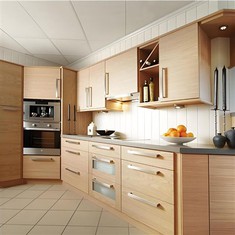
| Type | American Standard Solid Wood Kitchen Cabinets |
| Structure | Framed, full overlay, with 1/4 inch exposure on sides, and 1/2 inch exposure on top and bottom. |
| Door and drawer fronts | 3/4 inch thick birch, Style(Available options), 2 1/2 inch stiles. |
| Door frame | 1 1/2 inch x 3/4 inch birch. |
| Frame | All made with CARB P2 standard plywood and wood veneer. |
| Side panels, floor, top | 1/2 inch plywood. |
| Shelves | 3/4 inch plywood, base and wall cabinets depth 10 3/8 inches. |
| Back panel | 1/4 inch plywood, 3 inch x 1/2 inch stile frame |
| Drawer box | 5/8 inch solid wood, 1/4 inch plywood bottom, dovetail joints. |
| Hardware | 1. DTC full-extension undermount soft-close slides. |
| 2. DTC 4-way adjustable soft-close hinges. | |
| Finish | Box finished with UV clear coat, interior UV match coating (same color as doors). |
| Door frame and doors | Painted solid colors, stained wood tones. |
| Packaging | KD (knock-down), standard export carton. |
cabinet wood veneers

Wood veneer cabinets blend natural beauty with affordability, offering an elegant solution for modern kitchens. However, their thin wood layer (0.2–0.5mm) bonded to substrates like MDF or plywood requires specific care to maintain longevity.
Wood veneer cabinets offer timeless elegance and sustainability but thrive only with informed maintenance. Pair region-specific heights with durable substrates (e.g., plywood for humid zones), adopt gentle cleaning rituals, and leverage customization for personalized designs. By respecting these elements, your cabinets will marry beauty and resilience for decades
how to paint over wood veneer cabinets

To successfully paint over wood veneer cabinets and achieve a durable, professional finish, follow this comprehensive guide based on industry best practices and material science. Wood veneer's thin wood layer (0.2–0.5mm) bonded to substrates like MDF or plywood requires specialized preparation and products to prevent peeling, bubbling, or poor adhesion.
Critical Prep Work: The Foundation for Success
Deep Cleaning:
Use trisodium phosphate (TSP) or a degreaser to remove grease, wax, and grime. Rinse thoroughly and dry for 24 hours .
Skip this step? → Grease residues cause paint to peel within weeks.
Sanding (Gentle & Precise):
Lightly sand surfaces with 220-grit sandpaper along the wood grain. Goal: Create a matte "tooth" for adhesion-do not sand through the veneer .
Use a tack cloth to remove all dust .
Damage Repair:
Reattach peeling edges with wood glue, clamped until dry .
Fill chips/dents with latex wood filler, then sand smooth .
Primer & Paint Selection: Veneer-Specific Choices
| Product Type | Best Options for Veneer | Avoid |
|---|---|---|
| Primer | Shellac-based (e.g., Zinsser BIN) or bonding water-based alkyd | All-in-one paint-primer combos |
| Paint | Acrylic latex, chalk paint, or water-based alkyd | Oil-based (rigid; cracks with veneer flex) |
| Finish | Satin or semi-gloss (balances durability & stain resistance) | Flat/matte (stains easily) |
Why These Work:
Shellac primer: Seals veneer pores, blocks stains, and adheres to slick surfaces without sanding .
Acrylic latex/chalk paint: Flexible finish moves with temperature-induced substrate expansion .
Painting Protocol: Technique Matters
Primer Application:
Apply a thin coat with a high-density foam roller or angled brush.
Dry 4–6 hours; lightly sand with 320-grit paper for smoothness .
Paint Application:
Use thin coats (2–3 minimum). Thick coats drip and dry unevenly .
Maintain "wet edge" technique: Overlap strokes before paint dries to prevent lap marks.
Dry 24 hours between coats .
Protective Topcoat (Essential for Kitchens):
Apply water-based polyurethane (for latex/chalk paint) or solvent-based poly (for alkyd) in thin, even layers .
Pros: Resists scratches, steam, and grease; extends finish life 3–5x.
Curing & Aftercare
Curing Time: 7–10 days before reattaching hardware or placing items .
Cleaning Maintenance: After curing, wipe only with damp microfiber cloth + mild soap .
Longevity Boost: Reapply paste wax every 6 months to protect the topcoat .
Pro Tips & Pitfall Avoidance
No-Sand Alternative: For intact veneer, use liquid deglosser instead of sanding-but test for finish compatibility first .
Veneer Edge Protection: Seal cut edges with clear sealant before priming to prevent moisture intrusion .
Hybrid Approach: For severely damaged veneer, apply 1/8" hardboard over cabinets, prime, then paint .
Test Patch: Always trial products on cabinet interiors first .
✨ Sustainability Note: Low-VOC paints (e.g., Benjamin Moore Natura) reduce fumes and eco-impact
With meticulous prep and the right materials, painted veneer cabinets can last 8–10 years. For bubbled or delaminated veneer, consult a restorer-painting over compromised sections accelerates deterioration
QAS
Can I paint over veneer kitchen cabinets?
Make sure the veneer is clean and dry. Then paint two thin coats of Chalk Paint (allowing the first coat to dry before applying the second). Leave to dry for at least 24 hours to allow the paint to bond with the surface before finishing with wax or lacquer.
What wood are IKEA cabinets made of?
medium-density fiberboard
Observers of IKEA kitchen cabinets like to point out that they are not real wood but rather are made from medium-density fiberboard (MDF).
Why is veneer wood so expensive?
Material Use: Veneered wood requires both a high-quality veneer and a stable substrate, increasing material expenses. Solid wood eliminates the need for these additional layers. Production Costs: Veneer manufacturing involves slicing thin layers of wood, bonding them to a base, and applying finishes.
Are veneer cabinets cheap?
Wood veneer cabinets provide the look and texture of natural wood at a reduced cost. That's because wood veneer cabinets are actually made of real wood! To create wood veneer, a thin sheet of real wood is adhered onto an underlying substrate.
What is the lifespan of wood veneers?
Kitchen Cabinet Refacing Method Comparison Table
|
Feature |
Laminate Refacing |
Hardwood Veneer Refacing |
|
Cost |
$4,000 - $10,000 |
$8,000 - $18,000 |
|
Lifespan |
5-10 years |
10-15 years |
|
Customization |
Pre-set colors/patterns |
Can be stained/painted |
|
Durability |
Prone to peeling, moisture damage |
More durable but can still chip/scratch |
What are the problems with wood veneer?
With wood, changes in moisture content mean shrinkage and swelling. Unfortunately, when a veneered panel shrinks or swells, the veneer does not "move" at the same rate as the substrate. This creates considerable stresses within the panel which, if great enough, result in wood failure.
Hot Tags: cabinet wood veneers, China cabinet wood veneers manufacturers, suppliers, Wood Veneer Panels Cabinets, Wood Veneer Cabinet Doors, wood veneer cabinet, Cabinet Wood Veneer
Previous
Wood Veneer Panels CabinetsSend Inquiry