

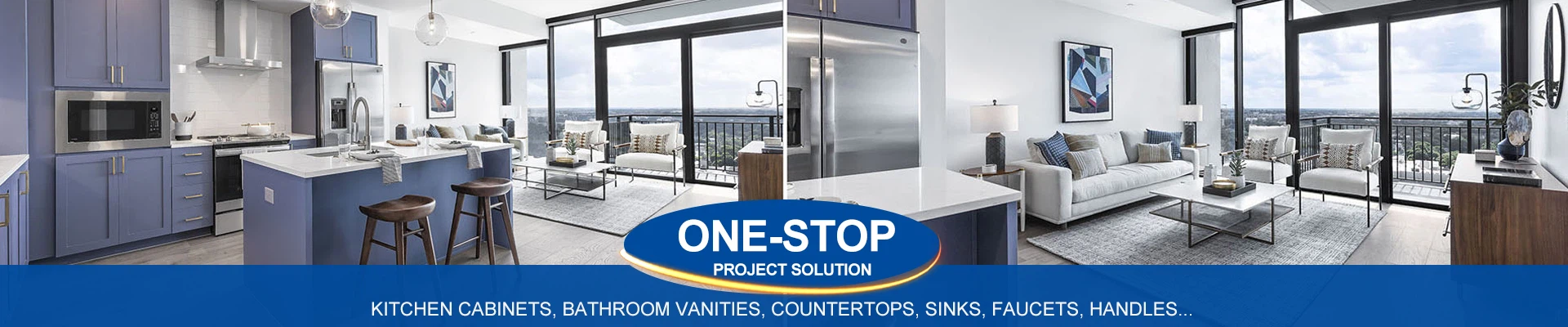


Kitchen Countertops And Backsplash Ideas
Color: Customized
Material: Granite or Granite
Size: Customized
Application: Kitchen, Bathroom
Service: OEM & ODM
Sample: Available
Description
Technical Parameters
kitchen countertops and backsplash ideas

Elevate Your Culinary Space: Premium Kitchen Countertops & Backsplash Collections
Crafted for both aesthetic brilliance and functional resilience, our countertop and backsplash systems transform kitchens into harmonious, high-performance spaces. Merging engineered durability with artisanal design, these collections cater to residential and commercial settings where style and practicality converge.
Core Functions & Technical Specifications
Dual-Layer Protection
Countertops: Shield cabinets from spills, heat, and scratches using non-porous quartz (3cm thick) or reinforced granite (2–3cm), rated to withstand 1200°F heat and 250+ scratch cycles .
Backsplashes: Defend walls against grease, steam, and stains with waterproof materials like tempered glass or epoxy-sealed porcelain tiles .
Ergonomic & Structural Design
Countertop Depths: 24" (60cm) standard; extendable to 42" (106cm) for islands with seating .
Backsplash Heights: 18" (45cm) standard; full-height options (up to ceiling) for seamless, dramatic effects .
Load Capacity: Supports ≤110 lbs/sq ft (countertops); ≤20 lbs/sq ft (backsplash zones) .
Key Selling Points
Material Innovation
Countertops: Quartz (non-porous, zero sealing), marble (luxury veining), or concrete (industrial chic) .
Backsplashes: Glass tiles (light-reflecting), metal mosaics (stainless steel/copper), or stone slabs (seamless quartz) .
Smart Integration
Pre-cut sink/outlet cutouts; undermount sink compatibility.
LED underlighting slots in backsplashes for ambient task lighting .
Eco-Efficiency
Recycled glass tiles (70% post-consumer content); low-VOC sealants .
Applications & Customization
| Setting | Recommended Combo | Purpose |
|---|---|---|
| Home Kitchens | Quartz countertop + Glass mosaic splash | Stain resistance; family-friendly |
| Commercial | Granite top + Stainless steel splash | Hygiene compliance; heavy-duty use |
| Compact Spaces | 24"-deep laminate + Peel-and-stick tile | Budget-friendly; DIY installation |
| Luxury Islands | 3cm marble top + Full-height slab splash | Statement aesthetics; seamless flow |
Design Philosophy: Harmony in Contrast
Our collections embrace three core principles:
Material Synergy: Matte quartz countertops pair with gloss glass tiles for tactile depth .
Color Resonance:
Monochromatic: Gray quartz tops + charcoal hexagonal tiles (textural contrast).
Bold Contrast: White marble tops + cobalt blue subway tiles (focal drama) .
Minimalist Integrity: Hidden grout lines in slab backsplashes create "floating" visual continuity .
Pairing Rules for Cohesive Aesthetics
Finish Alignment
Polished countertops → Glossy backsplashes (e.g., quartz + glass).
Honed countertops → Matte backsplashes (e.g., concrete + travertine) .
Scale & Proportion
Large-format countertops (e.g., 10ft islands) demand expansive backsplashes (full-height or oversized tiles) .
Small kitchens → Light-reflecting backsplashes (e.g., metallic mosaics) to amplify space .
Pattern Discipline
Veined countertops (marble/granite) → Solid-color backsplashes to avoid clutter.
Neutral countertops (white/gray) → Geometric or mosaic tiles for personality .
Why Choose Our System?
End-to-End Service: Free 3D design renders + professional installation .
Lifetime Warranty: 15 years on countertops; 10 years on backsplashes.
Global Inspiration: Mediterranean stone textures + Scandinavian minimalism
how far should countertop overhang

The distance a countertop should overhang depends on its functional purpose, structural requirements, and design context. Below is a detailed breakdown of standard overhang measurements based on key applications, supported by industry guidelines and ergonomic principles:
1. Standard Overhang for Seating
Dining/Bar Areas:
12 inches (30 cm): Minimum depth for comfortable knee clearance when seated .
Height-Adjusted Depths:
Counter height (36"): 12–15" overhang .
Bar height (42"): 8–12" overhang to prevent leg interference .
Clearance: Maintain 15" vertical space between countertop and seat for ergonomics .
2. Functional Zones
Prep Areas:
0.5–1.5 inches (1.3–3.8 cm): Flush or minimal overhang for seamless cleaning .
Sink/Cooktop Zones:
1–2 inches (2.5–5 cm): Prevents water/debris from dripping onto cabinetry .
Range Hoods:
Extend 3–4 inches (8–10 cm) wider than the cooktop on each side for optimal smoke capture .
3. Structural Limits & Support Requirements
Natural Stone (Granite/Quartz):Max Unsupported Overhang:
10 inches (25 cm) for 2cm-thick slabs.
14 inches (35 cm) for 3cm-thick slabs .
Support Systems:
Corbels/Brackets: Required every 24–36 inches for overhangs >10 inches .
Aprons/Beams: Essential for spans >15 inches (e.g., islands) to prevent sagging .
4. Special Applications
| Scenario | Overhang | Key Considerations |
|---|---|---|
| Kitchen Islands | 12–18 inches (30–46 cm) | Balances seating and prep space; ≥15" requires steel reinforcement . |
| Bathroom Vanities | 0.5–1 inch (1.3–2.5 cm) | Prevents items from rolling off; avoids collision with doors . |
| Outdoor Counters | 8–12 inches (20–30 cm) | Protects cabinetry from rain; uses weather-resistant materials . |
5. Common Mistakes to Avoid
Excessive Overhang Without Support: Causes cracking in stone surfaces .
Ignoring Appliance Clearances: Dishwashers/ovens require ≥1" clearance from counter edges .
Mismatched Heights: Overhangs for seating must align with stool/chair dimensions .
Conclusion: Balancing Form and Function
Ideal countertop overhang harmonizes ergonomics, structural integrity, and aesthetics. For seating, 12–15" is standard; for functional zones, 1–2" suffices. Always reinforce overhangs >10" and consult local building codes for compliance. As noted in design guidelines:
how heavy are granite countertops

1. Standard Weight Calculations
Per Square Foot:
2 cm (¾ inch) thick: ≈ 12–13 lbs/sq ft .
3 cm (1¼ inch) thick: ≈ 18–20 lbs/sq ft .
Per Slab:
A typical slab measures 9–10 feet long × 5–6 feet wide (45–60 sq ft).
2 cm slab: 540–780 lbs (e.g., 45 sq ft × 12 lbs/sq ft).
3 cm slab: 810–1,200 lbs (e.g., 60 sq ft × 20 lbs/sq ft) .
2. Factors Influencing Weight
Thickness:
3 cm countertops are ~50% heavier than 2 cm due to added material .
Density Variations:
Granite density ranges 160–190 lbs/cubic foot (2,560–3,040 kg/m³).
Denser types: Absolute Black (168 lbs/cu ft) vs. lighter Bianco Romano (162 lbs/cu ft) .
Dimensions:
A 6-foot-long countertop (3 cm thick) weighs 400+ lbs, while a 10-foot slab exceeds 800 lbs .
3. Weight by Common Applications
| Countertop Type | Dimensions | Thickness | Approx. Weight |
|---|---|---|---|
| Standard Kitchen Section | 6 ft × 2 ft (12 sq ft) | 3 cm | 240–260 lbs |
| Island Countertop | 8 ft × 4 ft (32 sq ft) | 3 cm | 640–700 lbs |
| Bathroom Vanity | 4 ft × 2 ft (8 sq ft) | 2 cm | 96–104 lbs |
4. Critical Installation Considerations
Structural Support:
Cabinets must support **≥300 lbs per linear foot**. Reinforce spans over dishwashers or gaps >2 ft .
Overhang Limits:
2 cm granite: Max 6-inch unsupported overhang.
3 cm granite: Max 9-inch unsupported overhang .
Handling & Transport:
Slabs must be carried vertically (like glass) to prevent cracking. Use A-frame racks and edge protectors .
5. Weight Comparison with Other Stones
Granite vs. Quartz:
Granite is ~15–20% heavier than quartz due to natural mineral density .
Granite vs. Marble:
Granite is ~10% denser than most marble varieties .
Key Takeaways
3 cm countertops (18–20 lbs/sq ft) offer durability but require reinforced cabinetry.
Exact weight depends on granite type-e.g., Absolute Black weighs 5% more than Bianco Romano .
Professional installation is essential: Slabs >300 lbs need specialized equipment and teams.
Hot Tags: kitchen countertops and backsplash ideas, China kitchen countertops and backsplash ideas manufacturers, suppliers
Send Inquiry


