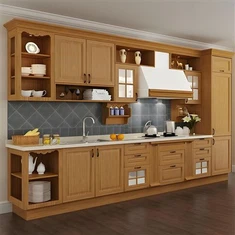


White Shaker Cabinets White Quartz Countertops
Color: Customized
Material: Granite or Quartz
Size: Customized
Application: Kitchen, Bathroom
Service: OEM & ODM
Sample: Available
Description
Technical Parameters
white shaker cabinets white quartz countertops

Timeless Elegance, Engineered for Life: White Shaker Cabinets with White Quartz Countertops
Crafted to harmonize sophistication with resilience, our White Shaker Cabinets paired with White Quartz Countertops redefine kitchen excellence. Combining minimalist Shaker aesthetics with quartz's technical brilliance, this duo delivers unparalleled beauty, durability, and versatility for residential and commercial spaces.
Product Features: Precision Meets Artistry
Cabinet Construction
Material: Solid hardwood frames (oak, maple, or birch) or moisture-resistant MDF/plywood, featuring mortise-and-tenon joints for structural integrity.
Finish: Matte or high-gloss UV-coated lacquer resisting yellowing, scratches, and humidity.
Hardware: Soft-close Blum hinges and full-extension drawer glides ensuring silent, smooth operation.
Quartz Countertops
Composition: 93% natural quartz aggregates + 7% polymer resins, creating a non-porous, stain-resistant surface.
Thickness: 12mm (lightweight), 20mm (standard), or 30mm (premium) for islands and heavy-use areas.
Design: Pure white (Calacatta Clara) or subtle veining (Carrara Morro) mimicking natural marble.
Eco-Conscious Engineering
FSC-certified wood cabinets + quartz with recycled content (up to 30% industrial waste repurposed).
Standard Dimensions & Customization
| Component | Dimensions | Custom Options |
|---|---|---|
| Base Cabinets | 24"D × 34.5"H × 12–36"W | Adjustable depth/height (±2") |
| Wall Cabinets | 12"D × 30–42"H × 12–36"W | Integrated lighting cutouts |
| Quartz Slabs | 3200×1600mm (max); 20mm/30mm thickness | Waterfall edges, integrated sinks |
| Islands | 36–48"W × 72–96"L | Two-tone cabinets (e.g., espresso lowers) |
Key Selling Points
Enduring Durability
Quartz withstands heat (150°C/300°F), stains (coffee, wine), and scratches; cabinets resist warping and UV damage.
Effortless Maintenance
Quartz requires no sealing-clean with mild soap. Cabinet surfaces wipe clean without specialized products.
Design Versatility
Shaker cabinets' clean lines adapt to modern, farmhouse, or industrial styles. Pair high-gloss cabinets with veined quartz for luxury, or matte finishes with pure white quartz for minimalism.
Space Optimization
White surfaces reflect 75% of ambient light, visually expanding small kitchens.
Applications: Beyond the Kitchen
Residential: Ideal for:
Modern Kitchens: Glossy white cabinets + waterfall-edge quartz islands.
Farmhouse Styles: Antique white cabinets + butcher-block accents.
Commercial: Cafés, boutique hotels leveraging stain resistance and upscale aesthetics.
Bathrooms & Laundry Rooms: Shaker vanities with 12"-deep quartz tops.
Design Philosophy: Simplicity with Intent
"Timeless Minimalism": Shaker cabinets' recessed panels and unadorned surfaces focus attention on quartz's natural elegance.
Light-Driven Harmony: White-on-white pairing maximizes natural light, reducing reliance on artificial lighting.
Contrast Balance: Introduce warmth via brass hardware or wood flooring to counterbalance cool tones.
Coordination Principles
Hardware Pairing
Modern: Matte black handles + steel appliances.
Traditional: Brass knobs + farmhouse sinks.
Backsplash Integration
For veined quartz, use solid-color subway tiles (e.g., beige, sage). With pure white quartz, experiment with mosaics.
Flooring Contrast
Dark hardwood or charcoal tiles ground the lightness of white surfaces.
Design Styles & Color Pairings
| Style | Cabinet Finish | Quartz Type | Accent Colors |
|---|---|---|---|
| Modern Luxe | High-Gloss Lacquer | Calacatta Clara Veining | Brass hardware, Navy islands |
| Coastal | Matte Ice White | Pure White | Seafoam backsplash, Oak floors |
| Industrial | Charcoal Gray Shaker | Babylon Gray | Black steel shelves |
Sustainable Commitment
Quartz: NSF-certified, low-VOC resins.
Cabinets: CARB2-compliant materials and formaldehyde-free adhesives.
Production: ISO 9001-certified factories with 30–45-day lead times for custom designs.
Pro Tip: Order physical samples to test undertones in your space's lighting. For open layouts, extend quartz to dining counters for visual continuity
can you replace cabinets without replacing quartz countertops

Yes, it is possible to replace cabinets without replacing quartz countertops, but the process is complex and requires meticulous planning to avoid damaging the quartz. Here's a detailed breakdown of the feasibility, process, and risks:
Feasibility & Prerequisites
Structural Integrity of Quartz
Quartz slabs (18–25 lbs/sq ft) must be intact, without cracks or seams directly over cabinet joints. Minor chips can be repaired, but major damage may necessitate replacement.
Critical Check: Verify no existing stress points by inspecting for hairline cracks near sinks or cooktops.
Cabinet Design Compatibility
New cabinets must match the original layout's:
Footprint: Depth/width variations >1/4 inch risk overhang instability or gaps.
Height: Mismatched heights require shimming, risking uneven quartz support.
IKEA/Sektion cabinets often need reinforcing brackets (e.g., FIXA) for weight distribution.
Step-by-Step Removal & Installation
Phase 1: Safe Countertop Removal
Detach Adhesives
Cut silicone beads between countertop and cabinets using a razor blade (angled parallel to the surface).
Apply caulk softener to dissolve stubborn adhesive.
Lift Quartz Slabs
Use suction cup handles with 2–4 people to lift slabs vertically-never drag or tilt.
Weight Alert: A 30-sq-ft slab can weigh 500+ lbs-hire pros for large sections.
Phase 2: Cabinet Replacement
Prepare Substrate
Ensure new cabinets are level within 1/8 inch over 10 feet using laser levels and shims.
Add ¾" plywood underlayment if new cabinets lack robust framing (e.g., particleboard).
Reinstall Quartz
Apply fresh silicone adhesive beads along cabinet edges.
Lower slabs onto cabinets, checking for gaps >1/16 inch (indicates poor support).
Key Risks & Mitigation
| Risk | Prevention Strategy |
|---|---|
| Quartz Cracking | Avoid over-tightening sinks/appliances; use flexible putty pads. |
| Adhesive Damage | Test solvents (e.g., acetone) on cabinet finishes first; scrape residue with plastic tools. |
| Support Failure | Install steel ledger boards for overhangs >12 inches. |
| Seam Separation | Re-seal joints with epoxy color-matched to quartz. |
When Replacement is Unavoidable
Consider new quartz if:
Cabinets are resized (e.g., adding an island or changing sink position).
Quartz shows thermal damage (discoloration from >150°C heat exposure).
Original slabs were seamed over weak points (e.g., dishwasher cutouts).
Professional vs. DIY Recommendation
Hire Pros If:
Quartz is >20mm thick or has complex edges (waterfall, ogee).
Cabinets are >15 years old or lack wall anchoring.
DIY Feasible For:
Small kitchens with single-slab counters and modular cabinets (e.g., IKEA).
Cost Considerations
Cabinet-Only Replacement: 3,000–8,000 (labor-intensive adhesive removal/leveling).
Quartz Damage Risk: Repairing chips/cracks costs 200–500; full replacement averages $4,500+.
✨ Pro Tip: Document cabinet dimensions and quartz seam locations before removal. Use numbered labels on slabs/cabinets for seamless reinstallation.
Hot Tags: white shaker cabinets white quartz countertops, China white shaker cabinets white quartz countertops manufacturers, suppliers
Send Inquiry