

Description
Technical Parameters
melamine board kitchen cabinet
Melamine board kitchen cabinets are extremely common, especially in modern, budget-friendly, and modular kitchens. They represent a specific type of construction with distinct advantages and limitations.
What Are Melamine Board Cabinets?
Core Material: The cabinet boxes and doors are made from engineered wood like particleboard or MDF (Medium-Density Fiberboard).
Surface: This core is then laminated with a melamine-impregnated paper. This paper is fused to the board under high heat and pressure, creating a hard, durable surface.
Key Point: The "melamine" refers only to the surface coating. It is a type of plastic laminate.
Advantages of Melamine Cabinets
- Cost-Effective: This is the biggest advantage. Melamine is significantly cheaper than solid wood or plywood cabinets.
- Durable & Hard-Wearing: The surface is highly resistant to scratches, stains, and heat compared to painted wood.
- Easy to Clean: A simple wipe with a damp cloth is usually all that's needed.
- Consistent Appearance: It offers a uniform color and pattern (like a wood grain) without the natural variations of real wood. It's ideal for a sleek, modern look.
- Wide Variety: Available in countless colors, patterns, and finishes (glossy, matte, textured).
❌ Disadvantages & Important Considerations
- Vulnerable to Water Damage: This is the Achilles' heel. If water penetrates the seams or edges, the particleboard/MDF core will swell and disintegrate. It cannot be repaired.
- Cannot Be Refinished: Unlike wood, you cannot sand and stain melamine. Once the surface is damaged or you're tired of the color, your only options are painting (with a complex process) or replacement.
- Limited Style Options: While colors are vast, it often has a flat, "manufactured" look that lacks the depth and character of real wood.
- Weight & Hardware: The particleboard core does not hold screws as well as plywood or solid wood. Over time, hinges and drawer slides can loosen.

Can You Paint or Update Melamine Cabinets?
Yes, but it requires a specific and meticulous process. Standard painting techniques will fail because paint does not adhere to the non-porous, slick surface.
The Correct Process for Painting Melamine:
- Deep Cleaning: Use a degreaser (TSP substitute) to remove all wax and grime.
- Sanding (Lightly): Lightly scuff the entire surface with 120-150 grit sandpaper to create a "tooth" for primer to grip.
- The CRITICAL Step - Priming: You MUST use a high-adhesion, bonding primer designed for slick surfaces.
- Best Choice: Zinsser BIN (Shellac-Based Primer) - unparalleled adhesion.
- Good Alternative: Stix by Insl-X (water-based bonding primer).
- Painting: Use a durable, cabinet-grade paint (e.g., Benjamin Moore Advance).
- Topcoat: A clear, water-based polyurethane topcoat is recommended for extra durability.
Warning: Skipping the specialized primer will result in the paint peeling off in sheets.
Design & Maintenance Tips
For a Modern Look: Choose a matte or high-gloss finish in a solid color (white, gray, black) for a sleek, minimalist kitchen.
- To Mimic Wood: Wood-grain melamine can be convincing from a distance and is a budget-friendly alternative.
- Protect the Edges: The edges are the most vulnerable. Ensure all seams are well-sealed during installation. Use a waterproof sealant around the sink area.
- Avoid Heavy Moisture: Wipe up spills immediately, especially around the sink and dishwasher.
Melamine vs. Other Materials

Conclusion: Who Are Melamine Cabinets For? |
|---|
Melamine board cabinets are a practical choice under specific conditions:
Ideal For:
- Budget-conscious projects.
- Rental properties.
- Low-moisture environments (e.g., a dry climate or a kitchen where spills are wiped immediately).
- Those who prefer a modern, easy-to-clean surface and don't plan on renovating again soon.
Not Ideal For:
- High-moisture environments without meticulous sealing.
- Homeowners who want the ability to easily update or refinish cabinets in the future.
- Those seeking a high-end, custom look with the character of natural wood.
Final Recommendation: If you choose melamine, invest in high-quality hardware (hinges, drawer slides) to ensure longevity, and be vigilant about protecting the edges from water. For a more durable and repairable budget option, consider plywood boxes with melamine doors as a compromise.
melamine cabinet colors
Melamine cabinet colors are incredibly diverse because the laminate surface can be printed with virtually any pattern or color. The choices generally fall into a few key categories that cater to different styles, from modern to traditional.
Here is a comprehensive guide to melamine cabinet colors, including the most popular choices and design tips.
Most Popular Melamine Cabinet Color Categories
1. The Neutrals: Timeless & Versatile
These are the most common and safest choices, offering great flexibility for your overall kitchen design.
- Pure Whites & Bright Whites: The most popular choice. Creates a clean, bright, and timeless look. Excellent for making small kitchens feel larger.
- Best for: Modern, Scandinavian, farmhouse, and transitional styles.
- Pair with: Any countertop color, dark or wood-tone flooring, and bold hardware (black, brass).
- Warm Whites & Creams: Softer than pure white, adding warmth and a cozy feel without being yellow.
- Best for: Traditional, farmhouse, and cottage styles.
- Pair with: Wood accents, marble-look quartz, and oil-rubbed bronze hardware.
- Shades of Gray: Ranges from light greige (gray+beige) to charcoal. A sophisticated neutral that replaced the brown-toned woods of the 2000s.
- Best for: Modern, contemporary, and industrial styles.
- Pair with: White countertops, stainless steel appliances, and chrome or black hardware.
2. Wood Grain Finishes: The Classic Look
Melamine is famous for realistically mimicking wood grains at a fraction of the cost.
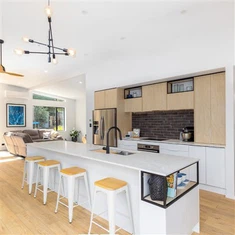
- Light Tones (Oak, Maple, Birch): These have a light, creamy background. Very popular in the 90s/2000s and are now making a comeback in a more modern, flat-profile door style.
- Best for: Creating a warm, airy, Scandinavian or mid-century modern feel.
- Medium Tones (Walnut, Cherry): Offers a richer, more traditional look. Good for adding warmth and contrast.
- Dark Tones (Espresso, Wenge): Creates a dramatic, moody, and high-contrast kitchen. Can make a large, well-lit kitchen feel cozy and luxurious.
3. Bold & Dramatic Colors
With modern printing, melamine can be any color. These are great for making a statement.
- Navy Blue & Deep Green: Extremely popular for creating a sophisticated, high-end look. Often used on kitchen islands for a "pop" of color.
- Black & Charcoal: The ultimate in modern, sleek design. Best in kitchens with excellent natural and artificial light to avoid a "cave-like" feel.
- Sage Green & Blush Pink: Softer, trend-forward colors that add personality without being overwhelming.
4. Textured & Solid Finishes
Beyond color, the surface finish dramatically affects the look.
- High-Gloss: Reflective and super modern. Excellent for making a small space feel bigger as it reflects light. Note: Shows fingerprints and smudges easily.
- Matte/Satin: The most practical choice. Has a soft, non-reflective finish that hides fingerprints and minor scratches very well. Currently very on-trend.
- Textured (Metallic, Concrete, Linen): These finishes add visual interest and a tactile feel, helping to disguise the "plastic" look of basic melamine.
How to Choose the Right Melamine Color
- Consider Your Kitchen's Size and Light:
- Small/Dark Kitchen: Choose light, reflective colors (white, light gray, high-gloss finish).
- Large/Sunny Kitchen: You can confidently use dark or bold colors.
- Think About Your Long-Term Style:
- Timeless: White, wood-look, gray.
- Trendy: Navy, sage green, high-gloss.
- Coordinate with Other Elements: Your cabinet color should work with your countertop, backsplash, floor, and hardware. Bring samples home to see them together in your kitchen's lighting.
- The Power of a Two-Tone Kitchen: Don't feel locked into one color! A very popular trend is using two melamine colors.
- Example: Navy blue lower cabinets with white uppers, or a gray island with white perimeter cabinets.
Important Limitations of Melamine Colors
- You Can't Paint It Easily: Unlike wood, you cannot simply sand and paint melamine. It requires a specific, intensive process with special primers to make paint adhere.
- Seams are Visible: Because the color is a surface layer, the edges (especially on doors) will show a brown or black line from the core material unless you choose a product with thermofoil wrapping that covers the edges.
- Color Matching: If you need to add a cabinet years later, it may be difficult to get an exact color match as dyes can change.
Conclusion & Top Recommendations
The best melamine color for you depends on your style and practical needs.
For the Safest, Most Flexible Choice: Pure White (Matte Finish)
For a Warm, Modern Look: Light Wood Grain (e.g., Oak)
For a Bold, Contemporary Statement: Navy Blue or Charcoal Gray (Matte Finish)
Pro Tip: Always get physical samples of the melamine chips. View them in your kitchen at different times of day. The color can look very different under artificial light versus natural sunlight. This is the most important step before you decide
Hot Tags: melamine board kitchen cabinet, China melamine board kitchen cabinet manufacturers, suppliers, Melamine Laminate Cabinets, melamine kitchen cabinet, Melamine Laminate Cabinet Paint, Melamine Cabinets Kitchen
Previous
Melamine Finish CabinetsSend Inquiry