

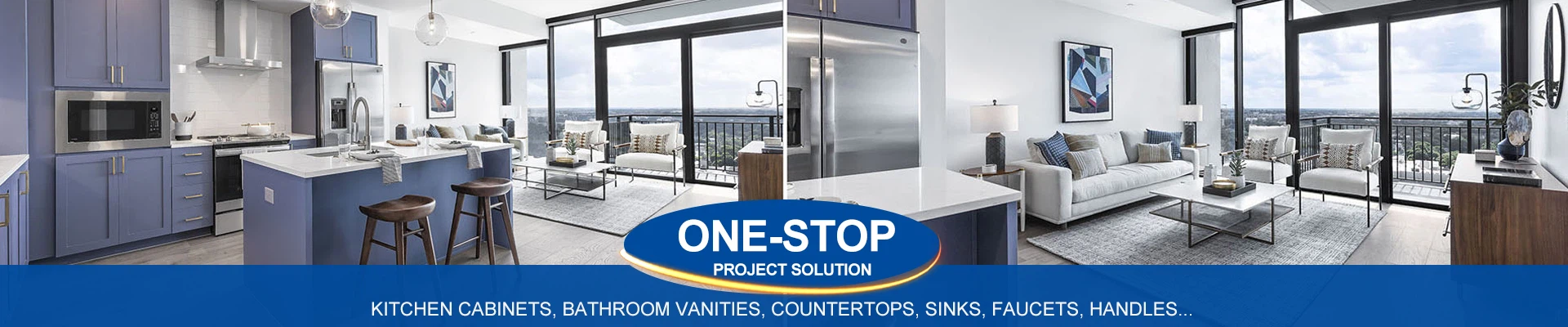


Thermofoil Shaker Cabinets
size : Customized size
Type : Modern Kitchen Cabinet
Accessories : Handle/Hinge/Basket/Faucet,ect
Advantage : Easy clean, Durable, Trendy
Material : Environment friendly E0/E1 Grade
Door panel finish : 18mm MDF two pac. high gloss Lacquer
Carcass : 18mm Melamine Board/Plywood/Particle Board
Countertop : Man-made stone,marble
Hinge&damper : Blum, DTC
Description
Technical Parameters
thermofoil shaker cabinets

Core Technology & Construction
Premium Material Composition
High-Density MDF Core: Engineered medium-density fiberboard (MDF) provides exceptional stability, resisting warping and swelling in humid environments. This uniform substrate ensures flawless thermofoil adhesion.
Advanced PVC Thermofoil: A durable vinyl film is heat-fused to the MDF under vacuum pressure, creating a seamless, non-porous surface that repels moisture, stains, and bacterial growth.
Eco-Conscious Materials: MDF cores utilize recycled wood fibers, while low-VOC adhesives and films comply with international environmental standards (E0/E1).
Precision Manufacturing Process
Vacuum-Press Bonding: Our proprietary heat-vacuum technology ensures 360° edge-to-edge adhesion, eliminating air pockets and delamination risks.
Laser-Cut Components: CNC routing guarantees millimeter-perfect door profiles for consistent Shaker, slab, or raised-panel designs.
Key Advantages & Performance
Superior Durability
Moisture Resistance: Ideal for bathrooms, kitchens, and coastal areas; withstands humidity without warping or mold growth.
Scratch/Fade Resistance: UV-stabilized thermofoil retains color integrity for 10–15 years, resisting chips and cracks better than laminate or painted wood.
Cost Efficiency & Low Maintenance
Affordable Luxury: Priced 30–50% lower than solid wood (750–1,200 for average kitchen remodels), offering high-end aesthetics at accessible rates.
Easy Cleaning: Non-porous surfaces wipe clean with damp cloths and mild detergent-no polishing or refinishing needed.
Design Versatility
Finishes: Available in 50+ options-glossy/matte solids (e.g., Alpine White, Charcoal), wood grains (Oak, Walnut), and textured effects (concrete, metallics).
Style Compatibility: Seamlessly integrates with modern, coastal, industrial, or farmhouse aesthetics via customizable hardware and profiles.
Technical Specifications
| Parameter | Specifications |
|---|---|
| Core Material | 18mm moisture-resistant MDF (CARB Phase 2 compliant) |
| Thermofoil Thickness | 0.3–0.5mm PVC film with anti-yellowing coating |
| Door Styles | Shaker, slab, raised panel, beaded inset |
| Sizes | Custom widths (12"–48"), heights (12"–36"), depths (12"–24") |
| Hardware | Soft-close Blum/Hettich hinges & slides (standard) |
| Lead Time | 3–5 weeks (custom orders); 1–2 weeks (stock designs) |
Unique Selling Points
Hybrid Durability Enhancements
Edge-Sealing Technology: Proprietary polymer seals protect vulnerable MDF edges from water ingress, extending lifespan by 40%.
Heat-Resistant Zones: Optional aluminum heat shields protect areas near ovens/stoves (up to 300°F/150°C).
Smart Customization
3D Design Integration: Collaborate using cloud-based CAD tools (e.g., SketchUp) for real-time visualization of layouts, finishes, and accessories.
Functional Accessories: Include pull-out trays, spice racks, and tilt-out bins-optimized for ergonomic storage.
Eco-Value Proposition
100% Recyclable: At end-of-life, MDF cores and PVC films can be repurposed, reducing landfill waste.
Applications
High-Humidity Areas: Bathroom vanities, poolside kitchens, and laundry rooms where moisture resistance is critical.
Budget-Conscious Projects: Residential kitchens, rental properties, and commercial cafés requiring cost-effective, low-maintenance solutions.
Design-Focused Spaces: Retail displays, office reception areas, and modern homes seeking sleek, uniform aesthetics.
Our Manufacturing Excellence
Rigorous Quality Control
Raw Material Testing: Every MDF batch undergoes swelling-resistance checks; PVC films are pre-tested for adhesion strength.
Triple-Phase Inspection: Components verified pre-production, mid-process, and pre-shipment for finish consistency, hardware alignment, and structural integrity.
Global Support & Services
OEM/ODM Solutions: Custom branding, packaging, and design adaptations for wholesalers/developers (MOQ: 50 units).
Lifetime Warranty: 15-year coverage against delamination, yellowing, or manufacturing defects.
After-Sales Network: 24/7 technical support and replacement-part logistics across 30+ countries.
Competitive Comparison
| Feature | Thermofoil (Ours) | Solid Wood | Laminate |
|---|---|---|---|
| Cost | $$$ (Most affordable) | $$$$$ (Premium) | $$$$ (Mid-range) |
| Moisture Res. | Excellent ✅ | Moderate ⚠️ | Good ✅ |
| Heat Res. | Good (with shields) ⚠️ | Excellent ✅ | Poor ❌ |
| Maintenance | Low (wipe clean) ✅ | High (refinishing) ❌ | Moderate ✅ |
| Lifespan | 10–15 years ✅ | 25+ years ✅ | 7–12 years ⚠️ |
Why Partner With Us?
Sustainability Commitment: Zero-waste manufacturing and solar-powered facilities (ISO 14001 certified).
Agile Customization: Prototype-to-production in 72 hours for urgent projects.
Total Value: Merge aesthetic flexibility, durability, and eco-consciousness-without compromising affordability.
Engineered for Real Life: We transform thermofoil into resilient, beautiful cabinetry-where practicality meets design, and innovation exceeds expectations. Request a sample kit today to experience the fusion of precision engineering and aesthetic excellence.
thermofoil vs acrylic cabinets

1. Material & Construction
Thermofoil Cabinets:
Made by heat-fusing a PVC vinyl film onto an MDF (medium-density fiberboard) core using vacuum pressure, creating a seamless, non-porous surface.
The MDF core provides stability and resistance to warping in humidity.
Acrylic Cabinets:
Feature an acrylic polymer coating applied over MDF or HDF (high-density fiberboard), polished to a high-gloss, mirror-like finish.
The acrylic layer is thicker and more rigid than thermofoil vinyl, enhancing scratch resistance.
2. Key Differences in Performance
| Feature | Thermofoil Cabinets | Acrylic Cabinets |
|---|---|---|
| Cost | Budget-friendly (750–1,200 per kitchen) | Premium pricing (30–50% higher than thermofoil) |
| Durability | Resists moisture, stains, and chipping; lifespan: 10–15 years | Superior scratch/UV resistance; lifespan: 15–20+ years |
| Heat Resistance | Vulnerable to peeling near ovens/stoves (>175°F/80°C) | Highly heat-tolerant; no delamination risk |
| Maintenance | Easy wipe-clean surface; shows minimal fingerprints | Requires frequent cleaning to avoid smudges/water spots |
| Aesthetics | Matte/satin finishes; solid colors or wood-grain patterns | High-gloss, reflective finish; bold colors/metallics |
3. Critical Strengths & Weaknesses
Thermofoil Advantages:
Moisture-proof: Ideal for bathrooms, laundry rooms, and coastal climates.
Low maintenance: Clean with mild soap/water; no refinishing needed.
Design flexibility: Mimics wood grain or solid colors at low cost.
Drawbacks: Prone to edge peeling if damaged; irreversible heat damage.
Acrylic Advantages:
Luxury appeal: Creates modern, high-end aesthetics; reflects light to enlarge spaces.
Durability: Resists scratches, UV fading, and impacts.
Hygiene: Non-porous surface inhibits bacterial growth.
Drawbacks: Shows fingerprints/smudges easily; higher cost.
4. Best Applications
Choose Thermofoil For:
Budget renovations, rental properties, or high-humidity zones (e.g., basements, poolside kitchens).
Styles: Farmhouse, coastal, or transitional designs with wood-look finishes.
Choose Acrylic For:
Luxury kitchens, modern/contemporary spaces, or commercial settings (e.g., showrooms, cafes).
Projects prioritizing visual impact and long-term investment.
thermofoil vs melamine cabinets

1. Material Construction & Manufacturing
| Aspect | Thermofoil Cabinets | Melamine Cabinets |
|---|---|---|
| Core Material | Medium-density fiberboard (MDF) | Particleboard or MDF |
| Surface Layer | PVC vinyl film heat-fused via vacuum press | Resin-impregnated paper fused under high pressure |
| Edge Sealing | Seamless wrap around edges | Visible seams; edges prone to chipping |
Key Insight: Thermofoil offers a seamless, non-porous finish, while melamine has a harder surface but vulnerable edges .
2. Performance Comparison
| Feature | Thermofoil | Melamine |
|---|---|---|
| Moisture Res. | Excellent (resists warping in humidity) | Moderate (swells if water penetrates edges) |
| Heat Res. | Poor (peels above 175°F/80°C) | Excellent (withstands high heat) |
| Scratch Res. | Moderate (vinyl can puncture) | High (hard surface resists abrasion) |
| Maintenance | Easy wipe-clean; stains rarely penetrate | Easy cleaning but shows water spots |
| Lifespan | 10–15 years (may yellow) | 15–20+ years |
3. Cost & Aesthetics
Thermofoil:
Cost: 100–350 per linear foot (budget-friendly) .
Design: Glossy/matte solids or wood grains; modern minimalist appeal .
Melamine:
Cost: Similar to thermofoil but higher for textured finishes .
Design: Matte finishes mimicking wood or solid colors; less seamless than thermofoil .
4. Key Drawbacks
Thermofoil:
Prone to peeling near ovens/dishwashers .
Yellowing over time due to UV/heat exposure .
Melamine:
Chipped edges expose absorbent core to moisture .
Difficult to refinish (requires plastic-adhesion primers) .
5. Best Applications
| Scenario | Recommended Material | Reason |
|---|---|---|
| High-Humidity Areas | Thermofoil (bathrooms, basements) | Superior moisture resistance & seamless edges. |
| Near Heat Sources | Melamine (oven surrounds) | Better heat tolerance. |
| Budget Kitchen Remodel | Both (thermofoil for style; melamine for durability) | Cost-effective with distinct strengths . |
| Rental Properties | Melamine (longer lifespan) | Resists scratches and heavy use. |
6. Verdict: Which to Choose?
Choose Thermofoil If: Prioritize a seamless, modern look; need moisture resistance; and have a tight budget. Avoid near heat sources .
Choose Melamine If: Require scratch/heat resistance; plan for long-term use; or prefer easy maintenance without yellowing risks
what is thermofoil cabinets made of

Thermofoil cabinets are constructed using a layered manufacturing process that combines engineered wood substrates with a specialized vinyl film. The core components and production techniques are detailed below:
1. Core Substrate: Engineered Wood
Material: Medium-density fiberboard (MDF) is the primary substrate, chosen for its uniform density and smooth surface. Some variants use particleboard for cost-sensitive applications.
Properties:
Moisture Resistance: Treated with moisture-resistant resins (e.g., CARB Phase 2-compliant binders) to prevent swelling in humid environments like kitchens or bathrooms .
Stability: Resists warping better than solid wood, ensuring dimensional accuracy for seamless thermofoil adhesion.
2. Surface Layer: PVC Thermofoil
Composition: A polyvinyl chloride (PVC) film, typically 0.3–0.5 mm thick, heat-fused to the substrate under vacuum pressure .
Key Treatments:
UV Stabilization: Prevents yellowing and fading.
Texture Embossing: Mimics wood grains, metallics, or solid colors (e.g., matte Alpine White, glossy Charcoal).
Anti-Microbial Coatings: Enhances hygiene for kitchen/bathroom use.
Table: Thermofoil Layer Properties
| Feature | Specification | Functional Role |
|---|---|---|
| Thickness | 0.3–0.5 mm | Balances flexibility and durability |
| Finish Options | 50+ variants (glossy, matte, textured) | Design versatility |
| Protective Coatings | UV-resistant, anti-yellowing | Long-term color stability |
3. Manufacturing Process
Vacuum Pressing:
MDF panels are placed in a vacuum chamber where PVC film is heated and uniformly compressed onto the substrate. This eliminates air pockets and ensures edge-to-edge adhesion .
Edge Sealing:
Exposed MDF edges are sealed with polymer-based tapes or PVC wraps to prevent moisture ingress and delamination .
Precision Cutting:
CNC routers shape doors/drawers to exact specifications (e.g., Shaker, slab styles).
4. Reinforcements & Enhancements
Heat Shields: Aluminum inserts protect areas near ovens (>175°F/80°C) .
Hardware Integration:
Soft-close hinges (e.g., Blum) are pre-installed for functionality.
Eco-Friendly Formulations:
Low-VOC adhesives and recyclable MDF/PVC align with sustainability standards .
5. Material Comparison
Table: Thermofoil vs. Alternative Surfaces
| Component | Thermofoil | Melamine | Acrylic |
|---|---|---|---|
| Core Material | Moisture-resistant MDF | Particleboard/MDF | HDF/MDF |
| Surface Layer | PVC film (heat-fused) | Resin-impregnated paper | Acrylic polymer |
| Edge Treatment | Seamless wrap | Visible seams | Polished edges |
| Moisture Res. | Excellent | Moderate | Good |
6. Environmental & Performance Considerations
Durability: 10–15-year lifespan; resistant to stains and bacteria but vulnerable to direct heat .
Recyclability: MDF cores and PVC films can be repurposed, reducing landfill waste .
Cost Efficiency: 30–50% cheaper than acrylic or solid wood, making it ideal for budget remodels .
Conclusion
Thermofoil cabinets leverage moisture-resistant MDF and thermally fused PVC films to deliver a cost-effective, low-maintenance solution. While sensitive to extreme heat, advancements like edge sealing and UV coatings enhance longevity. Their seamless aesthetics and eco-compatibility solidify their role in modern cabinetry. For optimal performance, pair with heat shields in high-temperature zones.
QAS
What are the disadvantages of thermofoil cabinets?
Susceptibility to Heat Damage: Thermofoil cabinets may not be as resilient when exposed to high temperatures. Particularly in areas where heat sources are active, such as stoves, ovens, or dishwashers, the vinyl coating of thermofoil cabinets can easily warp or peel off.
Can thermofoil cabinets be redone?
You can repair the finish by replacing it with a refinishing or refacing, but getting new cabinets may be a better investment depending on their age and condition.
What type of cabinets last the longest?
Which cabinet materials offer the best longevity? Solid wood cabinets, particularly oak and hickory, are highly durable and resist wear, dents, and moisture. Plywood and medium-density fiberboard (MDF) also provide good long-term performance at a more affordable price point.
What kind of wood is under thermofoil?
Thermofoil cabinets are made by applying thin layers of vinyl film onto medium-density fiberboard (MDF) or engineered wood core. The result is a sleek and smooth cabinet surface resembling painted wood.
Can thermofoil be removed from cabinets?
Use a heat gun (or even a hair dryer) to heat up the thermofoil. You will see it gradually loosen and you should be able to peel it back and remove it completely. In many cases, the entire sheet will peel off the front & sides of the door - fully in tact!
Hot Tags: thermofoil shaker cabinets, China thermofoil shaker cabinets manufacturers, suppliers, pvc kitchen cabinet, PVC Cabinets Kitchen, Thermofoil PVC Cabinet Doors
Send Inquiry


