

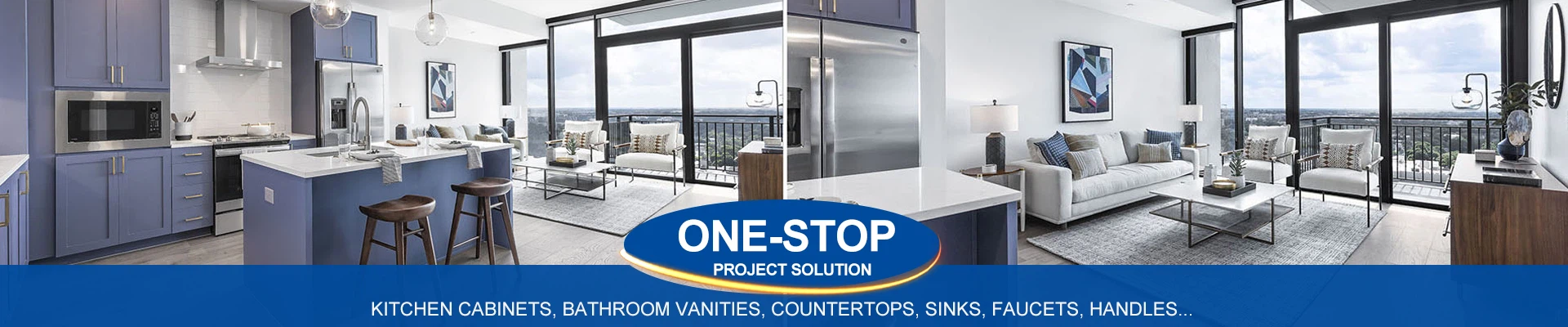


Description
Technical Parameters
white shaker thermofoil cabinets

Product Definition & Core Technology
White Shaker Thermofoil Cabinets combine the timeless Shaker-style profile-characterized by clean lines, recessed panels, and minimalist aesthetics-with a thermofoil surface finish. The thermofoil layer consists of a polyvinyl chloride (PVC) film heat-fused onto engineered wood substrates (typically moisture-resistant MDF or plywood) under vacuum pressure. This process creates a seamless, non-porous surface that replicates painted finishes while enhancing durability.
Key Product Characteristics
Aesthetic Versatility
Classic Shaker Design: Flat-panel doors with recessed centers and crisp, square edges suit traditional, transitional, and modern kitchens.
Finish Options: Bright white gloss, matte, or textured finishes provide a clean, bright aesthetic that pairs with granite, quartz, or wood countertops.
Durability & Maintenance
Moisture Resistance: The thermofoil seal prevents water ingress, making these cabinets ideal for humid environments (e.g., kitchens, bathrooms).
Stain & Scratch Resistance: UV-stabilized PVC resists fading, chips, and everyday wear better than painted wood.
Easy Cleaning: Non-porous surfaces wipe clean with mild detergents; no refinishing or polishing required.
Structural Integrity
Solid Wood Framing: Doors feature mortise-and-tenon joints with solid wood rails for longevity.
Reinforced Substrates: Moisture-resistant MDF or plywood boxes (CARB Phase 2 compliant) resist warping.
Edge Sealing: Thermally wrapped edges eliminate seams vulnerable to delamination.
Functional Hardware
Soft-Close Hinges/Drawers: Standard Blum or Hettich hardware ensures silent, smooth operation.
Adjustable Shelves: ¾" plywood shelves support heavy items and adapt to storage needs.
Common Specifications
| Component | Specification |
|---|---|
| Door Material | Solid wood frame + thermofoil-wrapped MDF panel |
| Box Material | ⅝" plywood or moisture-resistant MDF |
| Shelves | ¾" adjustable plywood with scratch-resistant coating |
| Finish Thickness | 0.3–0.5 mm UV-protected PVC film |
| Sizes | Wall cabinets: 12"–48"W, 12"–36"H; Base cabinets: 9"–48"W |
| Hardware | Soft-close hinges/drawer slides (standard) |
| Compliance | CARB Phase 2, low-VOC adhesives |
Applications
Residential Kitchens:
Primary storage solution for budget-conscious remodels or new builds.
Pairs with quartz/granite countertops for upscale aesthetics without solid-wood costs.
Commercial & Specialty Spaces:
Rental Properties: Low maintenance and cost-efficiency appeal to landlords.
Bathrooms/Laundry Rooms: Moisture resistance suits high-humidity areas.
Retail/Office Reception Areas: Sleek white finish elevates professional spaces.
Installation Considerations
Wall Preparation
Ensure walls are plumb and level; thermofoil cabinets cannot be sanded to correct uneven surfaces.
Climate Control
Acclimate cabinets to room temperature/humidity 48 hours pre-installation to prevent material stress.
Hardware Alignment
Use manufacturer-provided templates for hinge drilling to avoid misalignment.
Heat Source Proximity
Maintain ≥ 9" clearance from ovens/stovetops; install aluminum heat shields if unavoidable.
Ventilation:
Avoid sealing cabinet backs against walls to prevent moisture trapping.
Global Market Demand by Region
| Region | Market Characteristics | Growth Drivers |
|---|---|---|
| North America | Dominant market (40% global share); Florida (Boca Raton, Coconut Creek), Arizona (Scottsdale) show high demand for white shaker thermofoil cabinets. | Renovation boom; preference for affordable luxury. |
| Europe | 30% market share; popularity in UK/Germany for modular kitchens. | Compact urban housing; moisture resistance needs. |
| Asia-Pacific | Emerging demand (20% share); luxury projects in Australia/Singapore; budget focus in India. | Rising urbanization; Western design influences. |
Projected Growth: Global thermofoil cabinet market to expand at 6.2% CAGR (2024–2030), driven by cost efficiency and design versatility.
Competitive Edge & Sustainability
Cost Efficiency: 25–40% cheaper than solid wood or acrylic alternatives.
Eco-Design: Recyclable MDF/PVC components and low-VOC adhesives align with circular economy trends.
Customization: Local suppliers (e.g., Florida, Arizona) offer size, finish, and hardware personalization.
Conclusion: White Shaker Thermofoil Cabinets merge timeless design, robust functionality, and accessibility. Their moisture resistance, low upkeep, and adaptability to diverse styles position them as a global staple for residential and commercial spaces. As market demand grows, innovations in eco-materials and heat-resistant treatments will further solidify their dominance in value-driven cabinetry.
can i paint over thermofoil cabinets

Key Challenges & Risks
Poor Paint Adhesion:
Thermofoil surfaces are non-porous PVC films, inherently designed to repel liquids (including paint) for stain resistance.
Paint struggles to bond to this slick surface, leading to peeling, chipping, or bubbling within months of application.
Surface Contamination Issues:
Kitchen cabinets often accumulate grease, oils, or silicone residues from cooking. Even minor contaminants cause "cissing" (fish-eye gaps) or blistering, where paint fails to adhere uniformly.
Heat and Moisture Vulnerability:
Thermofoil itself can delaminate near heat sources (e.g., ovens). Adding paint layers increases the risk of heat-induced bubbling or moisture trapping, accelerating deterioration.
If Attempted: Critical Preparation Steps
While professional refinishers sometimes succeed, the process requires extreme diligence:
Degrease & Decontaminate:
Clean surfaces with trisodium phosphate (TSP) or denatured alcohol-not "impure IPA" (isopropyl alcohol), which leaves residues.
Mechanical Abrasion:
Sand the thermofoil with 120-220 grit sandpaper to create a "tooth" for adhesion. Avoid sanding through the PVC layer to prevent MDF swelling.
Specialized Primers:
Use bonding primers designed for plastics (e.g., Stix or BIN Shellac-based primers). Oil-based primers perform better than latex.
Paint Selection:
Acrylic enamel or urethane-modified paints offer flexibility to resist cracking. Avoid thick coats-thin layers cure more reliably.
Curing Conditions:
Maintain low humidity (<50%) and temperatures of 65–85°F during application/drying to prevent blistering.
Long-Term Durability Concerns
Even with perfect preparation:
Lifespan: Painted thermofoil typically lasts 1–3 years before showing wear, versus 10+ years for new thermofoil or wood cabinets.
Maintenance: Touch-ups are frequent around handles or high-contact areas due to paint fragility.
Recommended Alternatives
| Option | Cost | Durability | Notes |
|---|---|---|---|
| Cabinet Refacing | $$ (Mid-range) | 10–15 years | Replace doors/drawers; keep existing boxes. |
| New Thermofoil Doors | $–$$ (Budget) | 10+ years | Retain cabinet framework; swap doors only. |
| Laminate Overlay | $$ | 15+ years | Apply new laminate sheets directly over thermofoil. |
Conclusion
Painting thermofoil cabinets is high-risk and labor-intensive, with low success rates for long-term adhesion. For budget-conscious updates, refacing or door replacement is more reliable. If painting is unavoidable, meticulous surface prep and industrial-grade primers are non-negotiable-yet results remain unpredictable. Always test methods on a small, hidden area first!
problems with thermofoil cabinets

1. Peeling & Delamination
Cause: Exposure to heat above 175°F (80°C) near ovens, dishwashers, or stovetops causes the PVC film to separate from the MDF substrate . Scratches or impacts can also initiate peeling.
Mitigation:
Install aluminum heat shields between cabinets and appliances .
Use high-temperature adhesive tapes for minor edge repairs .
Avoid placing heat-generating appliances within 9" of cabinets .
2. Water Damage & Swelling
Cause: Though moisture-resistant, scratches or unsealed edges allow water to penetrate the MDF core, causing swelling and degradation .
Mitigation:
Seal edges with PVC edge banding or waterproof tapes during installation .
Immediately wipe spills; avoid abrasive cleaners that scratch the surface .
3. Yellowing & Discoloration
Cause: UV exposure and heat cause white/off-white thermofoil to develop a yellow tint over time. Grease buildup accelerates this process .
Mitigation:
Choose UV-stabilized thermofoil (e.g., CamTech's SURFUSION technology) .
Clean surfaces monthly with degreasers (e.g., trisodium phosphate) .
4. Limited Repair Options
Challenge: Peeling thermofoil cannot be spot-repaired; entire door/drawer replacements are often needed . Painting requires intensive prep (sanding, plastic-bonding primers) and still risks peeling within 1–3 years .
Solutions:
Reface doors/drawers: Replace only damaged components (~63% of peeling cases resolved this way) .
Apply adhesive overlays: Self-adhesive PVC films or laminates cover damage temporarily .
5. Design & Aesthetic Limitations
Issues:
Mostly limited to slab or Shaker styles; intricate moldings are rare .
"Plastic-like" appearance clashes with traditional kitchens .
Color matching during repairs is difficult .
Workarounds:
Opt for textured wood-grain finishes to mimic natural materials .
Use hybrid designs (e.g., thermofoil doors with wood frames) .
6. Short Lifespan
Reality: Average functional lifespan is 10–15 years-shorter than wood, laminate, or acrylic cabinets .
Extending Longevity:
Select high-pressure thermofoil (e.g., Rigid Thermo Foil) with thicker PVC layers .
Avoid direct sunlight using window films or blinds .
Key Prevention & Maintenance Tips
| Problem | Preventive Action |
|---|---|
| Peeling | Install heat shields; use cabinets ≥12" away from ovens . |
| Water Damage | Seal edges during installation; repair scratches immediately . |
| Yellowing | Clean monthly with non-abrasive degreasers; choose colored thermofoil . |
| Irreparable Damage | Budget for door replacement every 10–12 years . |
Conclusion
While thermofoil cabinets offer affordability and moisture resistance, their vulnerability to heat, peeling, and yellowing demands proactive maintenance. For high-heat zones, consider alternatives like melamine or acrylic.
If damage occurs, refacing or using adhesive overlays is more effective than painting. Investing in quality thermofoil (e.g., UV-stabilized, edge-sealed products) can extend usability to 15+ years
best solution thermofoil cabinets

1. For Minor Damage (Peeling/Bubbling)
Syringe Adhesive Injection: For small bubbles or edge peeling, inject specialized adhesive (e.g., contact cement) under the lifted film using a fine-tip syringe, then press flat with a squeegee.
Heat Re-Bonding: Use a low-heat hair dryer to soften the thermofoil, then firmly press the area with a cloth to reactivate the adhesive. Avoid temperatures above 175°F to prevent scorching.
Edge Sealing: Apply PVC edge tape or waterproof sealant to exposed edges to halt further peeling.
2. For Moderate Damage (Scratches/Discoloration)
Repair Kits: Use colored wax sticks or furniture markers to camouflage light scratches. Choose shades matching the cabinet's finish for seamless blending.
Degreasing & UV Protection: Clean yellowed surfaces with trisodium phosphate (TSP) to remove grease buildup. Apply UV-resistant sealants to slow future discoloration.
Partial Refacing: Replace only damaged doors/drawers (~50–150 per unit) instead of full cabinets.
3. For Severe Damage (Large Peeling/Warping)
| Solution | Cost | Lifespan | Process |
|---|---|---|---|
| Full Refacing | 1,500–5,000 | 10–15 years | Replace doors/drawers; retain existing cabinet boxes. |
| Laminate Overlay | 800–3,000 | 15+ years | Adhere new laminate sheets directly over thermofoil. |
| Hybrid Replacement | 2,000–7,000 | 20+ years | Install thermofoil uppers + melamine/acrylic bases for heat-prone zones. |
4. Preventive Maintenance & Upgrades
Heat Shields: Install aluminum barrier panels between cabinets and appliances (e.g., ovens) to block direct heat.
Moisture Control: Seal edges during installation; wipe spills immediately to prevent MDF swelling.
Hardware Upgrades: Use soft-close hinges (e.g., Blum) to reduce impact stress on doors.
5. Cost-Benefit Analysis
| Approach | Pros | Cons | Best For |
|---|---|---|---|
| Repairs | Low cost (10–50); DIY-friendly | Temporary fix; lasts 1–3 years | Minor damage in budget kitchens |
| Refacing | 50–70% cheaper than full replacement | Limited to cabinet exteriors | Outdated styles with intact boxes |
| Full Replacement | Long-term solution; customizable materials | High cost (4,000–15,000) | Severe damage or design overhaul |
Key Recommendations
Prioritize Prevention: Use heat shields and edge sealing during initial installation to avoid 80% of common issues.
Hybrid Designs: Combine thermofoil uppers (aesthetic appeal) with melamine bases (heat/scratch resistance) for optimal balance.
Professional Assessment: For widespread damage, consult a cabinet specialist. Full replacement may cost less long-term than repeated repairs.
Verdict: The best solution depends on damage extent and budget. For most homeowners, refacing or hybrid replacement offers the optimal balance of cost, durability, and aesthetics. Invest in UV-stabilized thermofoil initially to extend lifespan to 15+ years
QAS
Are thermofoil cabinets cheap?
Because thermofoil cabinets are typically constructed using wood composite materials like MDF, they're one of the most affordable cabinet finishes available.
How to protect thermofoil cabinets from heat?
Heat shields are highly recommended for all light-colored cabinetry, especially thermofoil doors, due to their effectiveness in dissipating built-up heat.
What are most cheap cabinets made of?
The least expensive cabinetry option is particle board made from wood byproducts. It is easy to work with and cut. However, it has low durability and can sag under heavy weight. It also absorbs water easily, leading to warping
What cabinets never go out of style?
The least expensive cabinetry option is particle board made from wood byproducts. It is easy to work with and cut. However, it has low durability and can sag under heavy weight. It also absorbs water easily, leading to warping.
What are the strongest cabinets?
White Oak
Oak is the one of the strongest hardwood you can purchase for cabinetry. The grain of oak wood is defined enough to be seen through a stain and white oak is a great choice for modern kitchens and cabinetry projects.
How do I tell if my cabinets are thermofoil?
Thermofoil Appearance
Thermofoil only comes in 1-piece doors, as opposed to 5-piece options available in natural wood or painted MDF. While slab (flat) doors are a popular choice, there are various detailed profiles that are available in thermofoil. All edges of thermofoil doors will be rounded to an extent.
Hot Tags: white shaker thermofoil cabinets, China white shaker thermofoil cabinets manufacturers, suppliers, pvc kitchen cabinet, Thermofoil PVC Cabinet Doors, PVC Cabinets Kitchen
Previous
Thermofoil Slab Cabinet DoorsSend Inquiry


