

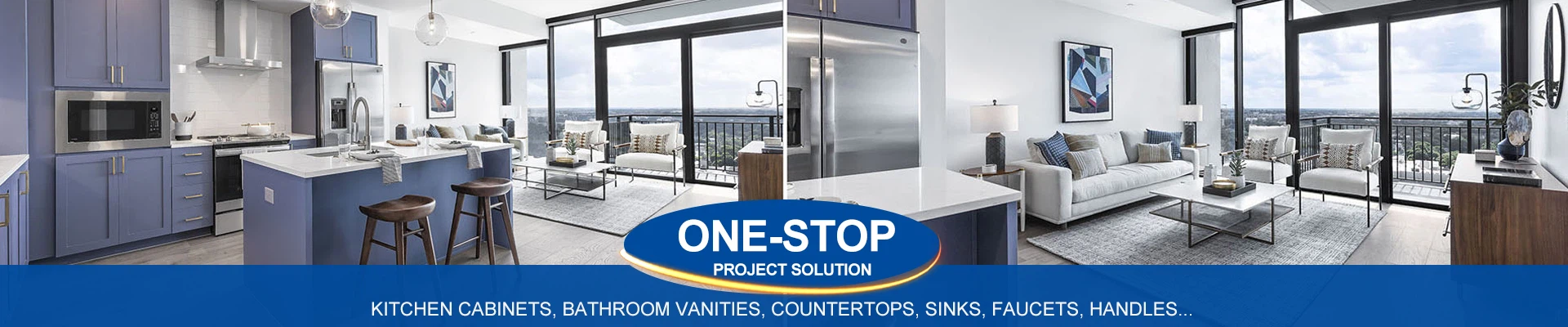
2 tone kitchen cabinet doors
May 20, 2025
Leave a message
Designing two-tone kitchen cabinet doors involves a thoughtful blend of color, style, and practicality. Here's a structured approach to achieve this look:
1. Color Combinations
Classic Contrasts:
White uppers + Navy lowers (timeless and coastal).
Black lowers + White uppers (modern and bold).
Earthy Tones:
Sage Green lowers + Cream uppers (farmhouse charm).
Walnut lowers + Soft Gray uppers (Scandinavian warmth).
Bold Statements:
Blush Pink lowers + Charcoal uppers (eclectic flair).
Teal island + Neutral perimeter (vibrant focal point).
2. Style Considerations
Modern Kitchens: Opt for high-contrast pairs (black/white) with handleless, flat-panel doors.
Farmhouse/Rustic: Soft, muted tones (sage, cream) on Shaker-style doors with detailed moldings.
Industrial: Reclaimed wood uppers + matte black lowers, paired with metal accents.
3. Material & Finish
Paint Finishes: Use durable semi-gloss or satin for easy cleaning. Matte finishes suit modern looks but require more maintenance.
Mixed Finishes: Combine matte and glossy sheens on the same door for subtle contrast (e.g., matte frame + glossy panel).
4. Hardware & Accents
Handles/Knobs: Brass or gold for warmth against cool tones; black matte for modern neutrality.
Mixed Metals: Pair brass handles with stainless steel appliances for layered sophistication.
5. Layout & Proportion
60-30-10 Rule: 60% dominant color (e.g., white uppers), 30% secondary (navy lowers), 10% accents (hardware, decor).
Small Spaces: Light uppers (to heighten ceilings) + darker lowers (to ground the space).
Island Emphasis: Paint the island a bold hue (emerald green, terracotta) against neutral perimeter cabinets.
6. Practical Execution
Preparation: Sand and prime doors thoroughly, especially for solid wood. Remove doors for even painting.
Painting Tips: Use high-quality cabinet paint. Mask off areas for clean lines between colors.
DIY vs. Pro: DIY saves costs but requires precision; professionals ensure a flawless finish.
7. Complementary Elements
Countertops/Backsplash: Neutral counters (quartz, marble) pair with bold cabinets. Use backsplash patterns to tie colors together.
Lighting: Under-cabinet lighting highlights darker lowers. Pendant lights over islands draw attention to contrasting colors.
8. Trends & Innovations
Bold Colors: Navy, emerald green, or terracotta for a contemporary edge.
Two-Tone Doors: Frame-and-panel contrast (e.g., white frame + gray panel) for subtle detail.
Glass Fronts: Paint cabinet interiors a contrasting color for depth (ideal for glass-door uppers).
9. Maintenance
Durability: Semi-gloss finishes resist stains and scratches better than matte.
Touch-Ups: Keep leftover paint for quick fixes. Avoid abrasive cleaners to preserve finishes.
10. Cost Considerations
Repainting Existing Cabinets: Budget-friendly (500–500–500–2,000 DIY; 3,000–3,000–3,000–7,000 professionally).
New Doors: Custom two-tone doors range from 150–150–150–400 per linear foot, depending on materials.
Inspiration Sources
Pinterest/Instagram: Search terms like "two-tone kitchen ideas" or "contrast cabinet doors".
Design Blogs: Explore curated palettes from Farrow & Ball, Sherwin-Williams, or Benjamin Moore.
By balancing color psychology, functional needs, and aesthetic harmony, two-tone cabinet doors can transform your kitchen into a stylish, personalized space. 🎨✨