

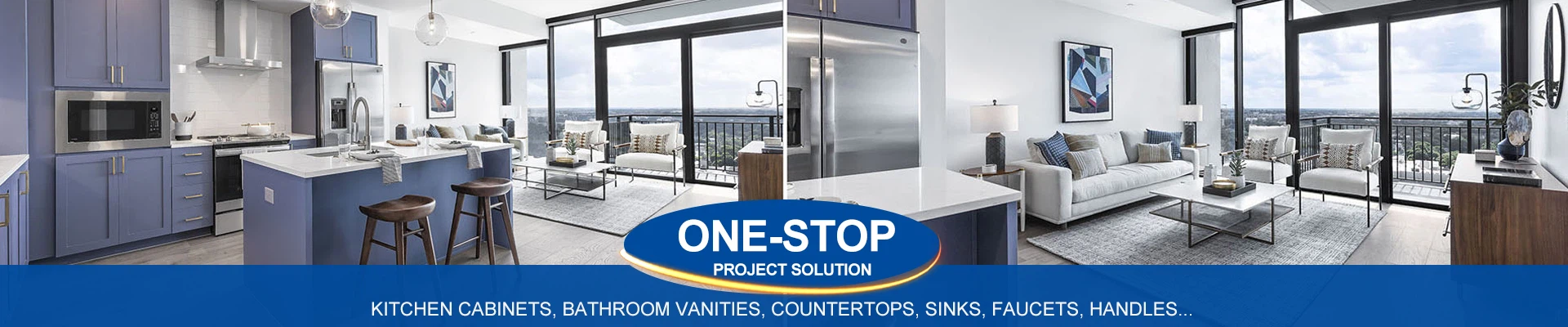
are kitchen cabinets installed on top of flooring
May 23, 2025
Leave a message
Kitchen Cabinets and Flooring: Installation Order Explained
Whether cabinets are installed on top of flooring or before flooring depends on the type of flooring, budget, and long-term plans. Here's a concise guide to help you decide:
1. Two Approaches
A. Cabinets Installed Before Flooring
Pros:
Cost Savings: Avoids wasting flooring material under cabinets.
Simpler Installation: No need to cut flooring around cabinet bases.
Cons:
Future Renovations: Replacing flooring later may leave gaps if cabinets are moved.
Height Mismatch: New flooring (e.g., thicker tile) may require shimming cabinets.
B. Cabinets Installed On Top of Flooring
Pros:
Seamless Look: Flooring runs continuously under cabinets.
Flexibility: Easier to replace cabinets or flooring later without redoing both.
Cons:
Higher Cost: Requires 5–10% more flooring material.
Precision Needed: Must cut flooring neatly around cabinet bases.
2. Recommendations by Flooring Type
| Flooring Type | Best Approach | Why? |
|---|---|---|
| Tile/Hardwood | Install flooring first | Permanent; difficult to replace later without damaging cabinets. |
| Laminate/LVP | Install cabinets first | Floating floors need expansion gaps; cabinets can restrict movement. |
| Vinyl Sheet | Install cabinets first | Seamless installation around cabinets is challenging. |
| Engineered Wood | Flooring first (if glued/nailed) | Stability. Cabinets first if floating. |
3. Key Exceptions
Heated Floors: Always install flooring (with heating elements) first to avoid damaging the system.
Appliances: Flooring must extend under dishwashers/fridges for easy removal.
4. Final Tips
For Budget Projects: Install cabinets first to save on flooring costs.
For Long-Term Flexibility: Install flooring first (ideal for permanent materials like tile/hardwood).
Use Toe Kicks: Hide gaps between cabinets and flooring with trim.
Pro Tip: If installing flooring first, leave a ¼" gap around cabinet bases and cover it with toe kicks. For floating floors, use spacers to maintain expansion gaps! 🔨