

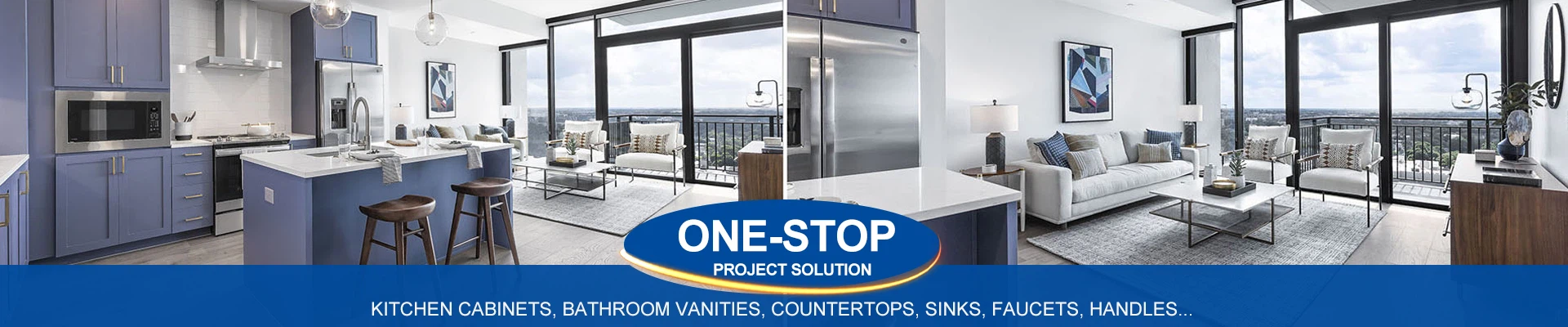
best kitchen cabinet colors for small kitchens
May 27, 2025
Leave a message
Best Kitchen Cabinet Colors for Small Kitchens

Choosing the right cabinet color can make a small kitchen feel brighter, larger, and more inviting. Here are the top color picks, along with tips to maximize your space:
1. Classic White
Why It Works: Reflects light, creates an airy feel, and pairs with any style.
Best For: Modern, farmhouse, or minimalist kitchens.
Pro Tip: Use a warm white (e.g., Benjamin Moore "Simply White" or Sherwin-Williams "Alabaster") to avoid a sterile look.
Pair With: Light countertops (quartz or marble) and metallic hardware (brass or chrome).
2. Soft Gray
Why It Works: Neutral and sophisticated, gray adds depth without overwhelming the space.
Best For: Contemporary or transitional designs.
Pro Tip: Opt for light, warm grays (e.g., Farrow & Ball "Cornforth White" or Sherwin-Williams "Agreeable Gray").
Pair With: White backsplashes and stainless steel appliances.
3. Pale Blue or Blue-Green
Why It Works: Cool tones evoke calmness and subtly expand visual space.
Best For: Coastal, cottage, or eclectic kitchens.
Pro Tip: Try muted shades like Benjamin Moore "Pale Smoke" or Sherwin-Williams "Rainwashed".
Pair With: Natural wood accents and white countertops.
4. Light Sage Green
Why It Works: Earthy and fresh, sage green adds warmth while keeping the room airy.
Best For: Farmhouse, rustic, or Scandinavian styles.
Pro Tip: Avoid dark greens-stick to soft, muted tones (e.g., Behr "Bitter Sage").
Pair With: Brass hardware and terrazzo or butcher block countertops.
5. Two-Tone Cabinets
Why It Works: Contrasting colors (e.g., white uppers + navy lowers) add visual interest without shrinking the space.
Best For: Modern or eclectic kitchens.
Pro Tip: Keep upper cabinets lighter to draw the eye upward.
Pair With: Open shelving in the lighter shade.
6. Warm Neutral (Greige or Cream)
Why It Works: Warm neutrals create coziness while maintaining brightness.
Best For: Traditional or transitional kitchens.
Pro Tip: Sherwin-Williams "Accessible Beige" or Benjamin Moore "Manchester Tan" work well.
Pair With: Matte black hardware and marble-look quartz.
7. Soft Blush or Pale Pink
Why It Works: Adds a touch of warmth and whimsy without overpowering.
Best For: Modern, bohemian, or retro-inspired kitchens.
Pro Tip: Use sparingly (e.g., lower cabinets only) paired with white uppers.
Pair With: Gold hardware and terracotta tiles.
8. Light Natural Wood Tones
Why It Works: Natural wood (oak, maple, or birch) adds warmth and texture.
Best For: Scandinavian, Japandi, or rustic kitchens.
Pro Tip: Avoid orangey stains-opt for light, neutral finishes.
Pair With: White walls and minimalist hardware.
Avoid These Colors
Dark Browns or Blacks: Can make small kitchens feel cramped.
Bright Reds or Oranges: Overstimulating in tight spaces.
Overly Bold Patterns: Stick to subtle textures or simple shaker styles.
Tips to Enhance Small Kitchens
Glossy Finishes: Reflective surfaces (semi-gloss or high-gloss paint) bounce light.
Open Shelving: Replace upper cabinets with shelves to reduce visual bulk.
Lighting: Layer task lighting (under-cabinet LEDs) and ambient fixtures (pendants).
Hardware: Sleek, minimalist pulls or hidden handles keep the look streamlined.
Final Thought: In small kitchens, light colors and strategic contrasts are your best allies. For a bold twist, add color via accessories (rugs, stools, or dishware) instead of cabinets!
kitchen cabinet layouts for small kitchens

Designing a kitchen cabinet layout for a small space is all about maximizing every inch for efficiency and creating a sense of openness. Here is a comprehensive guide to the best layouts, storage solutions, and design tricks for small kitchens.
1. The Best Layouts for Small Kitchens
These three layouts are the most efficient for maximizing space and workflow.
| Layout | Description | Best For | Pros | Cons |
|---|---|---|---|---|
| Galley (Parallel) | Two parallel runs of cabinets with a single walkway between them. | Narrow, rectangular spaces. | Highly efficient workflow; minimal wasted space; classic "work triangle" is easy to achieve. | Can feel cramped; poor for socializing; limited counter space. |
| L-Shaped | Cabinets along two adjacent walls, forming an "L". | Small square or rectangular rooms, open-plan corners. | Opens up the floor; efficient work triangle; frees up two walls for other uses. | Limited counter/cabinet space on two walls; the corner cabinet can be awkward. |
| Single-Wall | All cabinets and appliances on one wall. | Studios, loft apartments, or very narrow "pullman" kitchens. | Space-efficient; simple; leaves the rest of the room open. | Inefficient workflow (cook must walk back and forth); very limited storage. |
Recommendation: The Galley layout is often the most efficient for a true small kitchen, while the L-Shape is ideal for opening up a corner in a studio or open-plan living area.
2. Space-Saving Cabinet & Storage Solutions
This is where you win back precious space. Implement these ideas:
Go Vertical: Utilize the full height of your walls.
Tall Cabinets/Pantries: Install floor-to-ceiling cabinets or pantries (even narrow ones) for food storage and appliances.
Extended Uppers: Take upper cabinets all the way to the ceiling to avoid dust-collecting gaps. Use the top shelf for rarely used items.
Smart Cabinet Interiors: Standard shelves waste space. Upgrade with:
Pull-Out Drawers: Replace deep shelves with full-extension drawers for easy access to pots and pans.
Vertical Dividers: For baking sheets, cutting boards, and trays.
Corner Solutions: Use Lazy Susans or magic corner units with pull-out shelves to make awkward corners accessible.
Toe-Kick Drawers: Install shallow drawers in the toe-kick space under base cabinets for flat items like pans, linens, or cleaning supplies.
Appliance Strategy:
Choose Slimline: Opt for a counter-depth or slimline refrigerator to avoid protruding into the walkway.
Microwave: Mount it under the counter or in an upper cabinet to free up counter space.
Open Shelving: Replace some upper cabinets with open shelves. This creates an airy, open feel and makes items accessible. However, it requires neat organization.
Glass-Front Cabinets: They visually open up the space, making it feel larger than it is.
3. Design Tricks to Make the Space Feel Larger
Color & Finish:
Light Colors: White, light gray, or pale pastels on cabinets reflect light and make the space feel open and airy.
Glossy Finishes: High-gloss or semi-gloss cabinet finishes reflect light, enhancing the sense of space.
Hardware: Choose simple, streamlined hardware (e.g., bar pulls) or integrated finger pulls to reduce visual clutter.
Countertops: A light-colored, reflective countertop (e.g., quartz) helps brighten the room.
Consistency: Using the same color on walls and cabinets blurs the lines, making the room feel less boxed-in.
4. Key Measurements & Clearances
Getting the dimensions right is critical for safety and comfort in a small kitchen.
Walkway Width: Minimum 36 inches (91.5 cm) of clear space. 42 inches (107 cm) is ideal for a one-cook kitchen.
Work Aisle: In front of counters/appliances, aim for 42 inches minimum.
Distance Between Counter and Uppers: 18 inches (46 cm) is standard, but 20 inches (51 cm) can feel more open and accommodate larger appliances.
5. Step-by-Step Planning Guide
Measure Precisely: Measure the length, width, and height of your kitchen. Note the locations of windows, doors, and existing plumbing.
Prioritize Your Needs: What do you need most? Counter space? Storage? Both? This will guide your layout and cabinet choices.
Sketch a Layout: Draw your kitchen to scale. Experiment with different layouts (Galley, L-Shape) on paper first.
Choose Appliances: Select your fridge, stove, and dishwasher first. Their dimensions are fixed and will dictate your cabinet sizes.
Plan Cabinet Configuration: Decide where each type of storage will go (e.g., pots and pans near the stove, dishes near the dishwasher).
Consult a Professional: For a small space, a kitchen designer can be invaluable in maximizing every centimeter. Many cabinet retailers offer this service for free.
Conclusion
The best small kitchen cabinet layout prioritizes efficiency, storage, and the illusion of space.
For narrow kitchens, a Galley layout is unbeatable for workflow.
For square-shaped rooms, an L-Shaped layout opens up the floor plan.
Maximize every inch with vertical storage, smart pull-outs, and integrated appliances.
Visually expand the space with light colors, reflective surfaces, and good lighting.
By focusing on these principles, you can transform your small kitchen into a highly functional, beautiful, and surprisingly spacious heart of your home.
modern kitchen cabinets for small kitchens

Designing a modern kitchen in a small space is all about embracing smart, space-saving solutions that prioritize clean lines, functionality, and an open feel. Here is a comprehensive guide to choosing and styling modern cabinets for your small kitchen.
1. Core Principles of Modern Design for Small Kitchens
Modern design is your best friend in a small kitchen because it inherently focuses on:
Minimalism: Less visual clutter = a more spacious feel.
Functionality: Every element must have a purpose.
Clean Lines: Sleek, uninterrupted lines make a space feel orderly and expansive.
Light & Reflection: Using materials and colors that reflect light to brighten the room.
2. Optimal Layouts for a Small Modern Kitchen
Your layout is the foundation. Choose one that maximizes efficiency.
| Layout | Why It Works | Best For |
|---|---|---|
| Galley (Parallel) | Super-efficient "work triangle"; zero wasted space; perfect for a single cook. | Narrow, rectangular spaces. |
| L-Shaped | Opens up the floor plan; frees up two walls for other uses; creates a natural work flow. | Small square rooms or corners in open-plan spaces. |
| Single-Wall | Extremely space-efficient; simple and streamlined. | Studios, loft apartments, or "pullman" kitchens. |
Recommendation: The Galley layout is often the most efficient for a true small kitchen.
3. Cabinet Door Styles & Colors
Door Style: Flat-Panel (Slab) doors are the quintessential modern choice. They are handleless, sleek, and create a clean, uninterrupted surface that doesn't visually break up the space.
Color Palette:
Light & Bright: White, Light Gray, Warm White, Cream. These colors reflect light and make the room feel open and airy.
Dark & Dramatic: Matte Black, Charcoal, Navy. Use these for a bold accent on a single wall or an island (if you have one). In a very small kitchen, use dark colors sparingly to avoid a cave-like feel.
Two-Tone: A hugely popular modern trend. Pair white or light gray upper cabinets with darker base cabinets (e.g., navy, black, or even a wood veneer). This grounds the space without overwhelming it.
4. Space-Maximizing Storage Solutions
This is where modern design shines. Integrate these features:
Full-Height Cabinets: Extend cabinets to the ceiling. This utilizes every inch of vertical space and eliminates dust-collecting gaps. Use the top shelf for rarely used items.
Integrated Handles (J-Pulls or Finger Pulls): Handleless cabinets create a flawless look. Channels cut into the top or side of the door allow them to be opened, saving space and improving safety in tight aisles.
Smart Interiors: Ditch standard shelves. Opt for:
Full-Extension Drawers: These are far more efficient than deep shelves. They bring the entire contents of the cabinet into view, preventing items from getting lost in the back.
Vertical Dividers: For baking sheets, cutting boards, and trays.
Corner Solutions: Lazy Susans or magic corner units with pull-out shelves make awkward corners accessible.
Toe-Kick Drawers: Install shallow drawers in the toe-kick space under the cabinets for flat items like pans, linens, or tablecloths.
Appliance Strategy:
Integrated Appliances: Choose cabinets panels that match your cabinet fronts to conceal the refrigerator and dishwasher. This creates a seamless, unified look.
Microwave: Mount it under the counter or in an upper cabinet to free up precious counter space.
5. Design Tricks to Enhance the Space
High-Gloss Finishes: Glossy cabinet surfaces reflect light, making the kitchen feel brighter and more open.
Open Shelving: Replace a few upper cabinets with open shelves. This creates an airy feel and makes items accessible. Keep it minimal and organized to avoid clutter.
Glass-Front Cabinets: Use a few cabinets with frosted or clear glass to add depth and prevent the wall of cabinets from feeling too heavy.
Lighting: Under-cabinet LED lighting is non-negotiable. It illuminates countertops, eliminates shadows, and makes the space feel larger. It's both a functional and aesthetic essential.
6. Material & Finish Choices
Cabinet Boxes: Opt for plywood construction instead of particleboard for greater durability and moisture resistance in a small, potentially steamy space.
Door Materials:
Laminated MDF: Affordable, durable, and available in a huge range of colors and high-gloss finishes. Perfect for the modern flat-panel look.
Thermofoil: A vinyl material that can create a seamless, handleless look; great for modern styles.
Countertops: A light-colored quartz with a subtle veining pattern is ideal. It's durable, non-porous, and reflects light.
Conclusion: Your Small Modern Kitchen Checklist
To create your perfect small modern kitchen, focus on these key elements:
Layout First: Choose a Galley or L-Shaped layout for efficiency.
Keep it Light: Use light colors (white, light gray) on cabinets to reflect light.
Embrace Sleek Lines: Choose flat-panel, handleless cabinets for a clean look.
Maximize Vertically: Use full-height cabinets to the ceiling.
Invest in Interiors: Prioritize pull-out drawers and smart organizers over standard shelves.
Illuminate: Install under-cabinet LED lighting to brighten workspaces.
Declutter: Maintain a minimalist aesthetic with clean countertops and hidden storage.
By following these principles, you can create a small modern kitchen that feels spacious, highly functional, and incredibly stylish-a true testament to the power of smart design.