

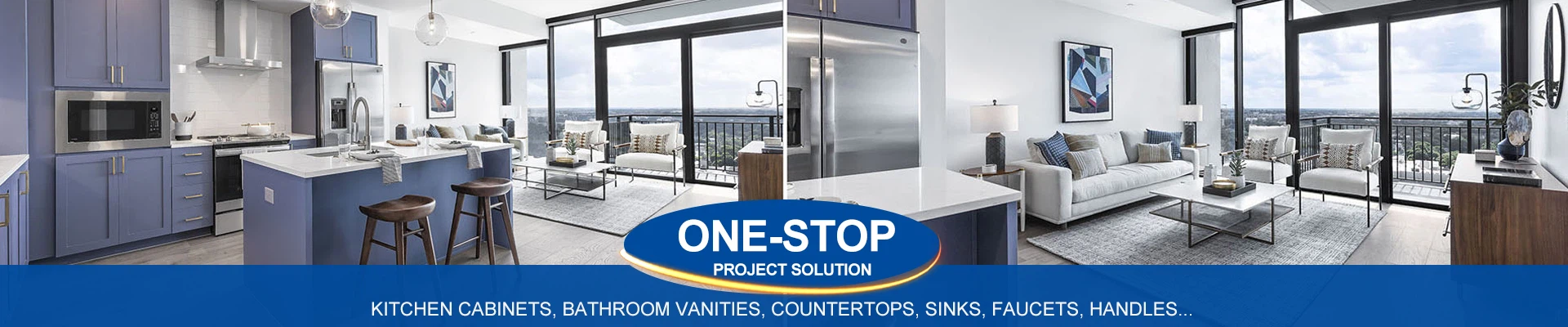
best kitchen cabinet surfaces
May 27, 2025
Leave a message
Here are some of the best kitchen cabinet surfaces and materials,along with their pros,cons,and ideal use cases:
Best Kitchen Cabinet Surfaces and Materials
1.Solid Wood
• Characteristics:Natural grain patterns,warm textures,and timeless elegance.
• Pros:
• Extremely durable and long-lasting.
• Can be refinished multiple times.
• Adds a classic,high-end look to any kitchen.
• Cons:
• Expensive.
• Requires regular maintenance(polishing and refinishing).
• Susceptible to moisture and warping if not properly sealed.
• Ideal For:Traditional,farmhouse,or high-end modern kitchens.
• Common Types:Oak,maple,cherry,pine.
2.Wood Veneer
• Characteristics:Thin layers of natural wood bonded to a sturdy core material(often MDF).
• Pros:
• Aesthetic appeal with beautiful grain patterns.
• Budget-friendly compared to solid wood.
• Versatile and can be wrapped around cabinet doors or shelves.
• Cons:
• Not as durable as solid wood.
• Limited refinishing options.
• Prone to water damage if not properly sealed.
• Ideal For:Homeowners looking for the look of wood at a lower cost.
• Common Types:Cherry veneer,oak veneer,maple veneer.
3.Plywood
• Characteristics:Engineered wood made from layers of veneer with perpendicular grains.
• Pros:
• Strong and durable,resisting warping and splitting better than solid wood.
• Customizable with various thicknesses and grades.
• Cost-effective compared to solid wood.
• Cons:
• Lacks the natural grain patterns of solid wood.
• Edges may require edge banding or veneer for aesthetics.
• Unsealed edges can absorb moisture.
• Ideal For:Homeowners looking for a durable,cost-effective alternative to solid wood.
• Common Types:Oak plywood,maple plywood,birch plywood.
4.Medium Density Fiberboard(MDF)
• Characteristics:Engineered wood made from wood fibers combined with wax and resin.
• Pros:
• Affordable and budget-friendly.
• Smooth surface ideal for painting,veneering,or laminating.
• Stable and does not warp or expand like natural wood.
• Cons:
• Not water-resistant;can swell or disintegrate if exposed to water.
• Not suitable for structural applications.
• May emit low levels of formaldehyde.
• Ideal For:Painted cabinets or cabinets with veneer or laminate finishes.
• Common Uses:Cabinet doors,drawer fronts,cabinet boxes.
5.Particleboard
• Characteristics:Made from wood chips combined with synthetic resin.
• Pros:
• Very affordable.
• Uniform and dense.
• Can be painted or veneered.
• Cons:
• Susceptible to moisture;can expand and discolor.
• Lightest and weakest type of fiberboard.
• Not suitable for structural applications.
• Ideal For:Budget-conscious homeowners or temporary setups.
• Common Uses:Cabinet boxes,drawer fronts.
6.Laminate
• Characteristics:Made from pressed wood with a layer of paper colored with melamine resin.
• Pros:
• Affordable and low-maintenance.
• Wide variety of colors and patterns.
• Easy to clean and resistant to moisture and scratches.
• Cons:
• Limited cabinet shapes.
• Susceptible to scratches and dents.
• Heavy and may sag over time.
• Ideal For:Homeowners looking for a low-maintenance,budget-friendly option.
• Common Uses:Cabinet doors,drawer fronts.
7.High-Pressure Laminate(HPL)
• Characteristics:Multiple layers of paper and resin pressed under high pressure.
• Pros:
• More resistant to chips and scratches compared to melamine.
• Wide range of colors and finishes.
• Easy to clean and maintain.
• Cons:
• More expensive than melamine.
• Ideal For:Homeowners looking for a durable,low-maintenance surface.
• Common Uses:Cabinet doors,drawer fronts.
8.Polyester
• Characteristics:Melamine blended with pine fiber,coated with a polyester film.
• Pros:
• Affordable.
• More scratch-resistant than melamine.
• Wide variety of colors and wood looks.
• Cons:
• Difficult to repair scratches.
• Ideal For:Homeowners looking for a durable,budget-friendly option.
• Common Uses:Cabinet doors,drawer fronts.
9.Thermofoil
• Characteristics:Durable,vacuum-sealed vinyl coating over wood or engineered wood.
• Pros:
• Low-maintenance and moisture-resistant.
• Available in a variety of colors and finishes.
• Cons:
• Limited to thermofoil-specific finishes.
• Ideal For:Homeowners looking for a low-maintenance,moisture-resistant finish.
• Common Uses:Cabinet doors,drawer fronts.
10.Glass
• Characteristics:Transparent or frosted glass for a unique and elegant look.
• Pros:
• Adds an open and airy feel to the kitchen.
• Easy to clean and can be treated with a protective coating.
• Cons:
• Shows fingerprints and scratches more easily.
• Not as durable as other materials.
• Ideal For:Homeowners looking for a modern,elegant aesthetic.
• Common Uses:Glass-fronted cabinets,display cabinets.
Tips for Choosing the Best Kitchen Cabinet Surface
• Budget:Determine your budget and choose a material that fits within your financial constraints.
• Durability:Consider the durability of the material,especially if you have a busy kitchen.
• Maintenance:Choose a material that fits your maintenance preferences.
• Aesthetics:Select a material that matches your kitchen design and color scheme.
• Moisture Resistance:Consider materials that are resistant to moisture,especially in high-humidity areas.
• Customization:Choose a material that allows for customization in terms of color,finish,and design.
Conclusion
The best kitchen cabinet surface depends on your specific needs,budget,and design preferences.For a timeless and elegant look,solid wood is a top choice.If you prefer a budget-friendly option,laminate or MDF are excellent alternatives.For durability and low maintenance,high-pressure laminate or thermofoil are great choices.By considering factors like durability,maintenance,and aesthetics,you can choose the perfect surface for your kitchen cabinets.