

can a kitchen island be longer than cabinets
Aug 22, 2025
Leave a message
can a kitchen island be longer than cabinets

Yes, a kitchen island can absolutely be longer than the cabinets, and this is a common design choice in modern kitchens-especially in open-plan layouts. The island's length is primarily determined by functional needs, available space, and design goals, rather than being constrained by cabinet dimensions. Here's a detailed breakdown:
Key Considerations for Island Length
Functional Requirements Drive Size
Islands often serve multiple roles: prep area, storage hub, dining space, or appliance station. A longer island accommodates these needs better than base cabinets. For example:
A 1.8–2m island can integrate a sink, dishwasher, or cooktop while leaving ample workspace .
Extended islands (≥2m) support social activities like dining or working, with seating for 4–6 people.
Spatial Constraints Override Cabinet Proportions
Minimum clearances are critical:
90cm between the island and cabinets for comfortable movement and cabinet access.
75–90cm on the island's non-working sides for traffic flow.
If space allows (e.g., large kitchens >10m²), islands can stretch beyond cabinet lengths without issue.
Design Flexibility
Islands often feature unique shapes or extensions that cabinets lack:
Integrated dining tables (1.6–1.8m long) attached to the island create visual length .
Asymmetrical layouts where the island anchors the kitchen while cabinets align along walls .
Practical Limits to Avoid
While length is flexible, these rules prevent dysfunction:
Avoid overcrowding: An oversized island in a small kitchen (<5m²) obstructs movement. Prioritize a minimum 75cm clearance on all sides .
Balance proportions: In narrow kitchens, limit island width to 80–90cm to maintain harmony with standard 60cm-deep cabinets .
Structural integrity: Islands longer than 2.5m may require additional supports (e.g., reinforced legs or thicker countertops like quartz) .
Benefits of a Longer Island
Enhanced workflow: Continuous countertops streamline cooking and serving .
Social connectivity: Extended seating encourages interaction while hosting.
Storage expansion: Accommodates deep drawers, pull-out racks, or appliance garages.
Real-World Examples
Small kitchens: A 1.3m island (minimal functional length) slightly longer than cabinets adds prep space.
Large kitchens: A 2.4m island with a waterfall edge becomes a focal point, housing cooking, cleaning, and dining zones.
In summary, an island's length should prioritize utility and spatial harmony, not cabinet dimensions. With proper planning, a longer island elevates both aesthetics and functionality.
can a kitchen island be taller than cabinets

Yes, a kitchen island can absolutely be taller than the surrounding cabinets, and this height variation is often intentional for functional and aesthetic purposes. Here's a detailed breakdown of the design considerations and practical applications:
1. Standard Height Differences
Base Cabinets: Typically range from 82-90 cm (most common at 85 cm), designed to match ergonomic working heights for food prep.
Island Height:
Cooking/Prep Zones: Aligned with cabinets (85-95 cm) for seamless workflow.
Social/Dining Zones: Often raised to 90–110 cm for bar-style seating, creating a distinct functional area.
Key Example: In "island + dining table" designs, islands are typically 93 cm high, while attached tables are 75 cm – an 18 cm difference that enhances visual appeal and hides wiring.
2. Functional Reasons for Taller Islands
Task Zoning: A taller island separates cooking (lower) from socializing (higher), reducing clutter visibility during meals.
Appliance Integration: Accommodates built-in appliances (e.g., microwaves, wine coolers) requiring extra vertical space.
Ergonomics: Bar counters at 110 cm allow comfortable standing conversation, avoiding awkward bending.
3. Design and Spatial Benefits
Visual Hierarchy: Height differences add architectural interest, making the island a focal point.
Space Definition: In open-plan kitchens, a taller island subtly demarcates kitchen and living areas without walls.
Storage Optimization: The extra height enables deep drawers or vertical storage for tall items (e.g., trays, appliances).
4. Critical Constraints to Consider
Clearance Requirements:
Maintain ≥75 cm between the island and cabinets for basic movement; ≥90 cm if cabinet doors need opening.
Ensure ≥90 cm clearance on non-working sides for traffic flow.
User Height Compatibility:
For prep zones, match island height to the user's elbow height (e.g., 85 cm for users <165 cm; 90 cm for >165 cm).
Structural Integrity: Heights >95 cm may require reinforced legs or thicker countertops (e.g., quartz).
5. Real-World Applications
Breakfast Bars: A 20–30 cm height increase transforms part of the island into a casual eating spot.
Multi-Level Islands: Combines a 90 cm cooking zone with a 110 cm bar section, catering to diverse activities.
Small Kitchens: Even in compact spaces, a slightly taller island (e.g., 90 cm vs. 85 cm cabinets) adds vertical storage without sacrificing workspace.
Conclusion: Balancing Form and Function
A taller kitchen island is not only feasible but often desirable for modern kitchens. By strategically elevating sections for dining, socializing, or storage-while adhering to ergonomic and spatial guidelines-you enhance both utility and style. For optimal results, consult a designer to customize heights based on user habits, kitchen size, and functional priorities.
What are the pros and cons of having a multi-level kitchen island?

Here's a balanced analysis of multi-level kitchen islands, highlighting their functional benefits and practical limitations based on design expertise and real-world use cases:
Pros of Multi-Level Kitchen Islands
Functional Zoning: Creates distinct areas for tasks-e.g., a standard 36-inch counter for prep and a raised 42-inch bar for dining or socializing-keeping messy cooking activities separate from clean dining spaces.
Improved Ergonomics: Varying heights cater to different activities:
Lower counters (30–36 inches) for comfortable chopping or baking.
Raised bars (42 inches) for relaxed standing conversations.
Visual Appeal: Adds architectural interest and modern flair, especially with waterfall edges or contrasting materials like quartz against wood.
Concealment of Clutter: The raised section hides kitchen mess (dirty dishes, appliances) from view in open-plan homes.
Integrated Utilities: Allows discreet placement of outlets, switches, or ventilation systems within the tiered structure.
Cons of Multi-Level Kitchen Islands
Reduced Prep Space: The raised tier sacrifices 12–18 inches of usable counter depth, limiting large-scale meal prep or appliance placement.
Higher Cost and Complexity: Custom fabrication (e.g., reinforced supports, precision cutting for countertops) increases costs by 15–30% compared to single-level islands.
Workflow Disruption: Breaks the continuous counter, forcing cooks to move between levels for tasks like sliding cutting boards or transferring ingredients.
Lighting Challenges: Pendant lights must be carefully positioned to avoid shadows on lower levels, requiring multiple fixtures or adjustable systems.
Seating Limitations: Bar-height stools at the raised tier may be uncomfortable for children, elderly users, or prolonged seating.
Key Considerations for Implementation
Space Requirements: Ideal for kitchens >150 sq. ft., with ≥42 inches of clearance around the island to navigate height transitions safely.
Material Compatibility: Opt for durable, cohesive materials (e.g., quartz for both levels) to unify the design and simplify maintenance.
Usage Priorities: Best suited for:
Entertainers needing social-dining separation.
Families with young children (mess containment).
Small kitchens where zoning optimizes limited space.
Avoid If: Tight budgets, single-cook kitchens, or workflows requiring uninterrupted counter runs.
In summary, multi-level islands excel in social, active kitchens where zoning and aesthetics are priorities but demand careful planning to mitigate space and cost trade-offs.
What are some creative design ideas for maximizing storage in a multi-level kitchen island?
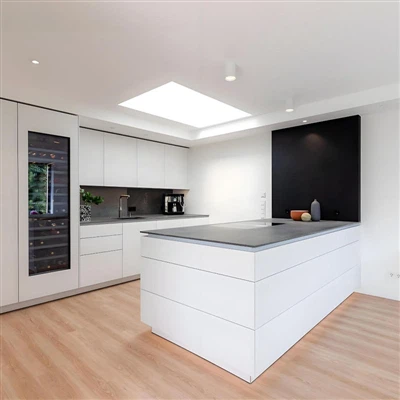
Here are creative design ideas for maximizing storage in a multi-level kitchen island, blending functionality with aesthetics:
1. Vertical Storage Integration
Tiered Shelving & Niches: Utilize the height difference between levels for open shelving on the lower tier (e.g., for cookbooks, decorative bowls, or herb planters) and closed cabinets on the upper tier. This creates visual depth while keeping essentials accessible.
Pull-Out Vertical Dividers: Install slim, pull-out racks between levels for cutting boards, baking sheets, or trays. This leverages often-wasted narrow spaces.
Hanging Systems: Mount hooks or rods beneath the upper overhang for mugs, utensils, or towels, freeing drawer space.
2. Specialized Compartments
Appliance Garages with Power: Dedicate a section of the upper level to hide small appliances (e.g., coffee makers, blenders) behind retractable doors, with built-in outlets for immediate use.
Deep Drawers & Pull-Outs: Fit the lower tier with full-extension drawers for pots/pans, while using shallow pull-outs in the upper level for spices, knives, or utensils. Soft-close mechanisms prevent slamming.
Integrated Waste/Recycling: Conceal pull-out bins for trash and recycling in the lower level, positioned near prep zones for efficiency. Use custom-sized drawers with odor-resistant liners.
3. Hidden & Multi-Functional Features
Retractable Workstations: Incorporate a pull-out chopping board or breakfast bar from the lower tier, creating instant workspace that tucks away.
Pop-Up Outlets & Charging Stations: Embed electrical outlets or USB ports in the upper countertop or side panels, enabling device charging without cluttering surfaces.
Convertible Seating Storage: Design toe-kick drawers under seating areas (e.g., for kids' crafts or pet supplies) or use flip-down panels on the island's side to create hidden cubbies.
4. Material & Layout Hacks
Mixed Materials for Zoning: Pair a butcher-block upper level (for prep) with a quartz lower level (for dining). The contrast visually separates functions while allowing storage customization (e.g., knife slots in wood, stain-resistant cabinets below).
Asymmetrical Cabinetry: Allocate deeper storage on one side (e.g., for appliances) and shallow shelves on the other (for display), aligning with the multi-level structure.
Corner Pull-Outs: Install rotating trays or "magic corners" in lower-tier cabinets to access awkward spaces.
Key Implementation Tips
Clearance & Workflow: Maintain ≥42" clearance around the island and place storage zones based on activity (e.g., trash near prep areas, dishes near seating).
Weight Management: Use heavy-duty slides (100+ lb capacity) for drawers holding appliances, and reinforce shelves with steel frames.
Aesthetic Harmony: Match hardware finishes across levels for cohesion, or use two-tone colors (e.g., navy lowers + white uppers) to define zones without visual chaos.
By combining these ideas, a multi-level island can house 30–50% more storage than a single-level design while enhancing workflow and style. Focus on task-specific storage (e.g., trash near prep, displays near seating) to maximize efficiency.