

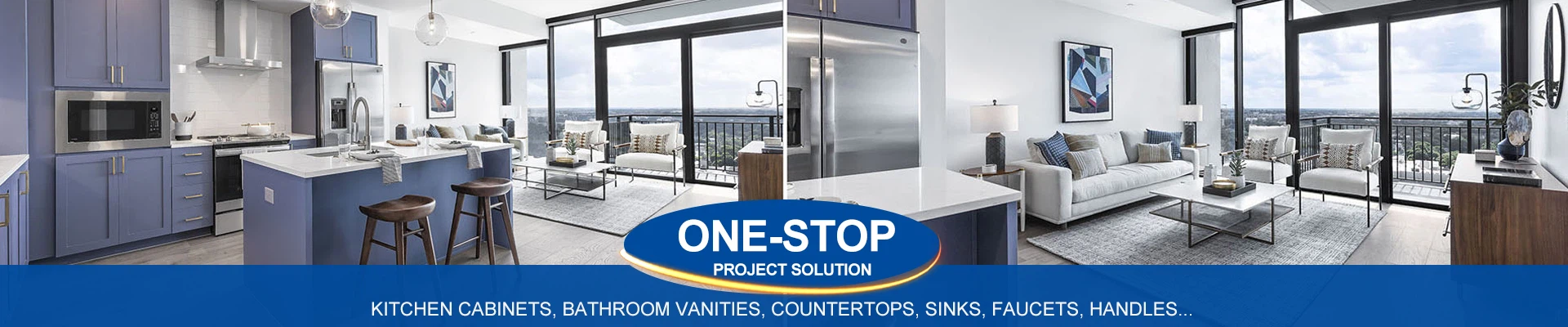
how to add depth to kitchen cabinets
Jun 24, 2025
Leave a message
To effectively add depth to kitchen cabinets-whether enhancing physical storage capacity or creating visual depth-here are practical solutions and design strategies based on the latest resources:
🛠️ I. Structural Modifications for Physical Depth
Extend Cabinet Depth
Base Cabinets: Increase standard 24-inch depth to 30–36 inches for larger appliances or bulk storage, ensuring adequate floor space remains .
Wall Cabinets: Customize from 12 inches to 24 inches (e.g., over refrigerators) using reinforced brackets to support added weight .
Countertop Overhang: Extend countertops by 1–2 inches to gain storage space inside cabinets without altering structure .
Optimize Corner & Vertical Space
Lazy Susans/Rotating Trays: Install 270° rotating pull-outs in corners to access deep storage easily .
Toe Kick Drawers: Utilize the 3-inch toe kick zone for shallow drawers (8–12 cm deep) storing trays or linens .
Ceiling-Height Cabinets: Replace standard upper cabinets with floor-to-ceiling units, adding 40+ cm of vertical storage .
Custom Inserts for Existing Cabinets
Pull-Out Shelving: Retrofitting deep cabinets with sliding shelves or tiered organizers prevents items from getting lost .
Door-Mounted Storage: Attach racks or magnetic strips to door interiors for spices, cutting boards, or utensils .
🎨 II. Visual Depth Enhancement Techniques
Color & Finish Strategies
Two-Tone Cabinets: Pair darker lower cabinets (e.g., deep gray) with lighter uppers to create a "receding" effect .
Glossy Finishes: Reflective surfaces (e.g., high-gloss paint) amplify light, making spaces feel larger .
Design Elements
Glass-Front Doors: Replace solid doors with glass to add transparency and perceived depth .
Crown Molding: Install molding at the top of cabinets to draw the eye upward, emphasizing height .
Open Shelving: Alternate sections of upper cabinets with open shelves to break visual bulk .
Lighting & Reflection
Under-Cabinet LEDs: Illuminate countertops to cast light downward, creating shadows that add dimension .
Mirrored Backsplashes: Enhance natural light diffusion and visually expand the space .
⚠️ III. Critical Considerations
Ergonomics & Safety
Maintain 30-inch clearance between stovetops and overhead cabinets to prevent fire hazards .
Avoid over-deepening wall cabinets beyond 24 inches to reduce strain when reaching .
Cost & Feasibility
DIY Adjustments: Retrofitting inserts costs 50–200; structural changes (e.g., depth extension) range from 300–1,000 per cabinet .
Professional Help: Consult designers for complex modifications (e.g., relocating plumbing/electrical) .
Material Choices
Use plywood or hardwood for extended cabinets-avoid particleboard for heavy loads .
Seal MDF edges to prevent moisture damage in humid kitchens .
💎 Pro Tips for Small Kitchens
Narrow Side Cabinets: Install 6–12 inch deep units in gaps between appliances/walls .
Fold-Down Tables: Attach to cabinet sides for temporary workspace, folding away to save depth .
Appliance Garages: Tuck appliances into retractable cabinets to free counter space .
✨ Key Insight: Depth optimization balances functionality (e.g., storing large pots) and perception (e.g., light colors). Prioritize high-usage zones for physical depth, while using design tricks in cramped areas.
By integrating these strategies, you can transform shallow or cluttered cabinets into efficient, spacious-feeling storage zones. For extensive renovations, always verify load-bearing requirements and clearance standards .