

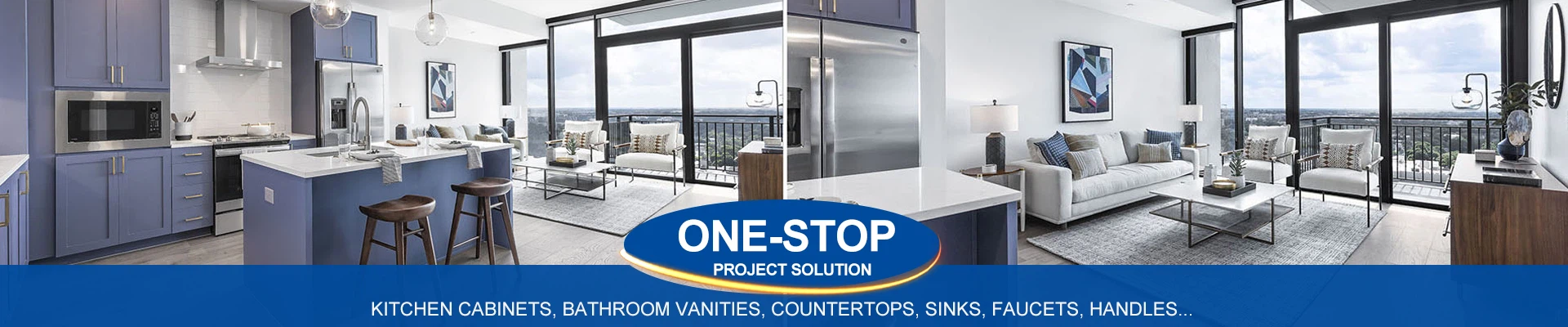
how to build a kitchen island using base cabinets
Jun 30, 2025
Leave a message
To build a functional and cost-effective kitchen island using base cabinets, follow this professional guide based on verified DIY methods from expert sources. This project enhances storage, workspace, and kitchen aesthetics while avoiding costly custom installations.
📐 1. Planning & Measurement
Critical Dimensions
Clearance:
Maintain **≥36" clearance** around all sides (42–48" ideal for comfort) .
Ensure aisles allow full use of appliances and drawers.
Island Size:
Minimum: 4' long × 2' deep .
Use standard 24"-deep base cabinets to match existing cabinetry .
Seating:
Allow 10–12" countertop overhang for legroom (no supports needed) .
Allocate 22–24" width per stool .
Design Considerations
Cabinet Selection: Stock base cabinets (e.g., IKEA, Home Depot) for affordability and structural support .
Layout Flexibility: For small kitchens, use narrow cabinets (as slim as 9" wide) .
Flooring Integration:
Floating floors (laminate/vinyl): Install cabinets before flooring .
Nailed/glued floors: Install flooring first .
🧰 2. Materials & Tools
| Materials | Tools |
|---|---|
| 2–4 base cabinets | Circular/track saw |
| ¾" plywood (back panel) | Drill + 2.5" cabinet screws |
| 2x4 lumber (floor supports) | 4-ft level & shims |
| Countertop (butcher block, laminate) | Clamps & pneumatic nailer |
| Corner braces (L-brackets) | Stud finder |
| Edge banding | Wood filler & sandpaper |
| Cost: 150–500 (depending on materials/hardware) . |
🔨 3. Step-by-Step Construction
A. Prepare the Base & Supports
Secure 2x4 Supports:Cut 2x4s to match the cabinet footprint. Anchor to subfloor:
Concrete: Use a .22-caliber shot tool + drive pins .
Wood subfloors: 2.5" drywall screws .
Ensure supports are level and square to walls.
B. Assemble Cabinets
Position Cabinets: Place over 2x4 supports, pressing fronts tightly against supports .
Level & Join:
Shim cabinets to level, then screw cabinet feet into 2x4s .
Join cabinets with 2.5" cabinet screws through side panels .
C. Reinforce Structure
Back Panel: Attach ¾" plywood to the back with brad nails + glue for rigidity .
Toe Kick: Build a 4"-high frame using 2x4s, set 3" inside cabinet edges .
Corner Braces: Add L-brackets to joints for heavy loads (e.g., appliances) .
D. Install Countertop
Attach Countertop:
Secure to cabinets with screws drilled upward .
For laminate countertops:
Cut laminate 1" larger than countertop, adhere with contact cement, trim excess with a router .
Maintain 10–12" overhang for seating .
⚠️ 4. Pro Tips for Success
Weight Distribution:
Reinforce islands >30" wide with center supports or thicker plywood .
Moisture Protection:
Seal exposed plywood edges with edge banding or polyurethane .
Drill 1" ventilation holes in enclosed sections to prevent damage .
Alignment: Use a hinge jig for precise door/drawer placement .
Mobility: Add lockable casters for flexibility .
💡 5. Design Variations
| Type | Best For | Key Features |
|---|---|---|
| Standard Island | Most kitchens | Base cabinets + countertop |
| Seating Island | Entertaining | 12–15" knee space; 22–24" width per stool |
| Appliance Garage | Small kitchens | Roll-up door + built-in outlets |
| Two-Tone Island | Visual contrast | Contrasting cabinet/countertop colors |
💰 6. Budget-Saving Hacks
Repurpose Cabinets: Use salvaged base cabinets .
Open Shelving: Replace upper cabinets with shelves (cuts costs by 30%) .
Curtain Doors: Install curtain wires instead of doors ($20 solution) .
Laminate Countertops: More affordable than stone or butcher block .
⏱️ Timeline & Cost Estimate
Time: 4–6 hours (excluding countertop adhesive drying) .
Cost: 200 (basic) – 500 (premium finishes/hardware) .
By following these steps, you'll create a sturdy, custom island that maximizes functionality without compromising style. Prioritize precise measurements, structural reinforcement, and moisture protection for long-lasting results 🛠️. Test cabinet alignment and drawer movement before finalizing the build.