

what is a vanity cabinet
Oct 22, 2025
Leave a message
what is a vanity cabinet

A vanity cabinet (often called a bathroom vanity) is a piece of storage furniture, typically with a countertop and sink, designed for the bathroom.
Think of it as the bathroom's equivalent of a kitchen sink cabinet. It's a central fixture that combines function and style.
Here's a detailed breakdown of what a vanity cabinet is and its key components.
Core Definition & Purpose
A vanity cabinet serves three main purposes:
- Storage: It provides concealed storage for bathroom essentials like toiletries, cleaning supplies, towels, and medications.
- Support: It supports the bathroom sink (basin) and countertop.
- Style: It is a major design element that sets the tone for the entire bathroom's aesthetic.
Key Components of a Vanity Cabinet
A typical vanity consists of several parts:
|
Component |
Description |
|---|---|
|
Cabinet Carcass |
The main box-like structure, usually made of wood, plywood, or MDF. |
|
Countertop |
The surface on top of the cabinet. Common materials are quartz, marble, granite, or solid surface. |
|
Sink (Basin) |
The bowl that sits on or in the countertop. Can be drop-in, undermount, or vessel-style. |
|
Faucet |
The tap that supplies water to the sink. |
|
Doors & Drawers |
Provide access to the storage space inside. |
|
Toe Kick |
The recessed space at the bottom that allows you to stand close to the sink comfortably. |
Common Types & Configurations
Vanity cabinets come in many styles to fit different spaces and needs.
1. By Installation Type
Freestanding: The most common type. It's a complete unit that sits on the floor, like a piece of furniture.
Wall-Mounted (Floating): Attached directly to the wall, leaving open space beneath it. This creates a modern look and makes cleaning the floor easier.
2. By Size & Configuration
- Single Vanity: Designed for one sink. Common widths are 24", 30", 36", 48".
- Double Vanity: Designed for two sinks. Common in master bathrooms. Common widths are 60", 72", 84".
- Vanity with Makeup Table: A longer vanity that includes a dedicated seated area for applying makeup.(A simple diagram showing a single vanity vs. a double vanity would be ideal here.)
Style & Design Considerations
The style of the vanity cabinet dramatically influences the bathroom's look.
- Modern: Flat-panel doors, sleek hardware, often in white, gray, or black. Floating vanities are popular.
- Traditional: Raised-panel doors, detailed molding, and furniture-like legs. Often in dark wood stains or white.
- Transitional: A blend of modern and traditional elements-e.g., a simple shaker door style in a contemporary color.
- Rustic/Farmhouse: Distressed finishes, beadboard doors, and apron-front sinks.
Important Features to Consider
When choosing a vanity, think about:
Storage Needs: How many drawers vs. doors do you need? Deep drawers are great for hairdryers; divided drawers organize small items.
Material Quality: In a humid bathroom, water-resistant materials like marine plywood or solid wood are best. Avoid particleboard if possible.
Height: Standard height is 34.5" for the cabinet, which becomes 36" with a countertop. "Comfort height" vanities (36" cabinet) are taller and more ergonomic.
Soft-Close Hardware: Hinges and drawer slides that close quietly and gently are a valuable upgrade.
Vanity Cabinet vs. Kitchen Cabinet: What's the Difference?
While similar, they are designed for different environments:
|
Feature |
Vanity Cabinet |
Kitchen Cabinet |
|---|---|---|
|
Primary Use |
Bathroom storage & sink support |
Kitchen storage & food prep |
|
Height |
Standard: 34.5" (cabinet only) |
Standard: 34.5" (cabinet only) |
|
Depth |
Standard: 21" |
Standard: 24" (deeper for pots/pans) |
|
Common Sizes |
24", 30", 36", 48" wide |
More modular (e.g., 12", 15", 18" widths) |
|
Sink Integration |
Designed to accommodate a basin |
Designed for a larger, deeper sink |
Conclusion
In short, a vanity cabinet is the essential storage and focal point of a bathroom. It's much more than just a sink stand; it's a functional piece of furniture that defines the room's style and organization.
Pro Tip: When selecting a vanity, prioritize storage functionality and water-resistant construction to ensure it lasts for years in the humid bathroom environment.
what is the height of a bathroom vanity cabinet

The height of a bathroom vanity cabinet is a crucial measurement that affects both comfort and style.
Here is a detailed breakdown of standard heights and key considerations.
Quick Answer: Standard Height
The standard height for a bathroom vanity cabinet (without the countertop) is 32 inches.
With a standard 1.5-inch thick countertop, the total finished height becomes 34.5 inches.
Detailed Height Breakdown
|
Component |
Standard Height |
Notes |
|---|---|---|
|
Vanity Cabinet (Box Only) |
32 inches |
This is the most common base cabinet height. |
|
Countertop Thickness |
1.5 inches |
Common for quartz, granite, marble. |
|
Total Finished Height |
34.5 inches |
The height from the floor to the top of the countertop. |
(A simple diagram showing the 32" cabinet + 1.5" countertop = 34.5" total height would be ideal here.)
Important Variations & Trends
While 34.5 inches is the traditional standard, other heights are becoming popular for comfort and accessibility.
1. "Comfort Height" or Counter Height Vanities: 36 inches
This is the new popular standard for many homeowners.
It's similar to kitchen counter height, reducing back strain when washing hands or brushing teeth.
Cabinet: ~34.5 inches + Countertop: ~1.5 inches = 36 inches total.
2. ADA Compliant (Accessible) Height: 34 inches maximum
Designed for wheelchair users, with specific requirements for knee clearance.
The total finished height must be no higher than 34 inches.
3. Vanity Height for Specific Users
Taller Individuals: May prefer vanities up to 42 inches.
Children: A lower vanity (around 30-32 inches total) or a built-in step stool is helpful.
How to Choose the Right Height for You
The best height depends on your comfort and the users of the bathroom.
- Test it Out: The easiest way to choose is to simulate the height.
- Stand in your bathroom and have someone measure the distance from the floor to your bent wrist (with your arm at a 90-degree angle). This is a good ergonomic starting point.
- Alternatively, visit a showroom and test different heights.
- Consider the Sink Type:
- Undermount or Integrated Sink: The height is simply the countertop height.
- Vessel Sink (Sits on top of the counter): The total height will be countertop height + vessel sink height (can add 5-8 inches). You may need a lower cabinet to compensate.
- Think About Vanity Style:
- Freestanding Vanity: Height is fixed by the cabinet design.
- Wall-Mounted (Floating) Vanity: Height is fully customizable during installation.
Conclusion & Recommendation
For most households, the best all-around choice is a 36-inch total height vanity. It offers a comfortable, modern feel that works for a wide range of users.
Pro Tip: Before you buy, use painter's tape to mark the proposed vanity height on your bathroom wall. Live with it for a day to see how it feels when you "use" the imaginary sink. This is the best way to ensure you choose a comfortable height.
how high should the medicine cabinet be above the vanity

The height of a medicine cabinet above the vanity is crucial for both functionality and aesthetics. The goal is to place it at a comfortable eye level for most users while creating a balanced look.
Here is the definitive guide with the standard measurement and key considerations.
The Standard Height: 60 Inches from the Floor
The most common and recommended measurement is to place the center of the medicine cabinet mirror at 60 inches (5 feet) above the finished floor.
Why this height? It aligns the center of the mirror with the average eye level of an adult (roughly 5'4" to 6' tall), making it easy to see your reflection without craning your neck.
How to Measure and Install
Here's the step-by-step process to achieve this standard height:
- Determine Your Vanity Height: First, know the final height of your vanity with the countertop. The standard is 36 inches.
- Find the Center Point: From the finished floor, measure up 60 inches and make a light pencil mark on the wall. This marks the center of your medicine cabinet.
- Account for the Cabinet's Height:
- Measure the total height of your medicine cabinet.
- Divide this number by 2 to find its center point.
- The top of the cabinet will be at: 60 inches + (half the cabinet height)
- The bottom of the cabinet will be at: 60 inches - (half the cabinet height)
- Example:
- If your medicine cabinet is 30 inches tall, half its height is 15 inches.
- Top of Cabinet: 60" + 15" = 75 inches from the floor.
- Bottom of Cabinet: 60" - 15" = 45 inches from the floor.
- (A simple diagram illustrating these measurements would be ideal here.)
Key Factors That Might Adjust the Standard
While 60 inches is the golden rule, consider these variables for a perfect custom fit:
- User Height (The Most Important Adjustment):
- Taller Users: You may want to raise the center point to 62 or 63 inches.
- Shorter Users or Children: Lowering the center point to 57 or 58 inches might be more practical.
- Pro Tip: Have the primary user stand in front of the vanity and mark the spot on the wall that aligns with their eye level. This is your custom center point.
- Vanity Height: "Comfort height" vanities are popular (38-42 inches tall). If your vanity is taller than 36 inches, you should still use the 60-inch center rule from the floor to maintain proper eye-level alignment.
- Sconce Lighting: If you are installing wall sconces on either side of the medicine cabinet, the electrical boxes are typically placed at 66 inches from the floor. Ensure your cabinet placement doesn't conflict with the light fixtures. The standard 60-inch center usually leaves plenty of room.
- Ceiling Height: In rooms with very low (8 ft) or very high (10+ ft) ceilings, you may adjust slightly to ensure the cabinet looks balanced on the wall.
Common Mistakes to Avoid
- Mounting Too High: Forces users to strain their necks to see into the mirror.
- Mounting Too Low: Makes the space feel cramped and may cause the cabinet to interfere with backsplashes or items on the countertop.
- Ignoring the Receptacle: Ensure the cabinet doesn't cover an electrical outlet, or plan to relocate the outlet if necessary.
Conclusion & Final Recommendation
For a functional and balanced look, install your medicine cabinet so the center of the mirror is 60 inches above the floor.
Your Action Plan:
- Confirm your finished vanity height.
- Measure 60 inches up from the floor and mark the wall.
- Use this mark as the center point for your medicine cabinet.
Final Pro Tip: Before drilling any holes, hold the medicine cabinet up against the wall (or use painter's tape to outline it). Have the primary users test the height to ensure it's comfortable for viewing. This simple step can prevent a permanent mistake.
what color cabinet with white bathroom vanity
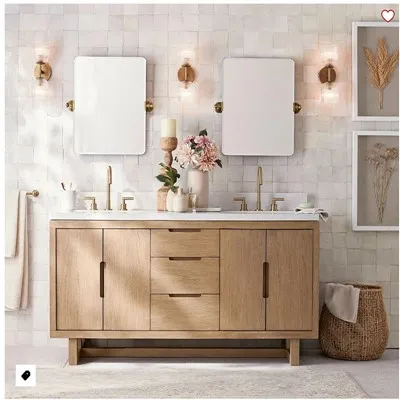
A white bathroom vanity is a fantastic choice because it's incredibly versatile and acts as a perfect neutral canvas. You can create almost any style, from timeless to dramatic, with your cabinet color choice.
Here's a comprehensive guide to the best cabinet colors to pair with a white vanity, broken down by style.
Color Palette Ideas for Cabinets with a White Vanity
|
Style Vibe |
Recommended Cabinet Colors |
Hardware & Accent Tips |
|---|---|---|
|
Timeless & Classic |
Gray, Navy Blue, Black |
Chrome, Polished Nickel, Crystal Knobs |
|
Warm & Organic |
Wood Tones, Sage Green, Warm Beige |
Brushed Gold, Oil-Rubbed Bronze, Woven Baskets |
|
Modern & Bold |
Charcoal, Dark Green, Deep Teal |
Matte Black, Sleek Chrome, Minimalist Pulls |
|
Bright & Airy |
Light Gray, Off-White, Pale Blue |
Brushed Nickel, Light Wood Accents |
1. Timeless & Classic Combinations
These choices will never go out of style and offer a clean, sophisticated look.
Gray: The ultimate modern neutral. A light to medium gray creates a soft, sophisticated contrast that is both calming and elegant. It's a very safe but stylish choice.
Navy Blue: A classic and powerful combination. Navy blue adds depth and a touch of traditional elegance without being overwhelming. It looks especially sharp with brass or gold hardware.
Black: For a high-contrast, "tuxedo" look. Black and white is always chic and dramatic. This is best in a bathroom with good natural or artificial light to keep it from feeling too dark.
2. Warm & Organic Combinations
These colors create a cozy, inviting, and nature-inspired spa-like feel.
Wood Tones (Natural or Stained): This is a winning combination. The warmth and texture of wood (like oak, walnut, or teak) balance the crispness of the white vanity beautifully. It brings instant warmth and character.
Sage Green: A very popular, soothing color that evokes a sense of calm and tranquility. It pairs perfectly with white for a fresh, organic look.
Warm Beige or Greige: If you want a truly soft, neutral palette, using a warm beige or greige (a mix of gray and beige) on the walls creates a seamless, cozy flow from the white vanity.
3. Modern & Bold Combinations
For those who want to make a design statement.
Charcoal or Dark Gray: A step beyond medium gray, charcoal adds serious drama and a sleek, modern edge.
Dark Green or Forest Green: Deep green feels luxurious and rich alongside white. It's a bold choice that creates a jewel-box effect.
Deep Teal or Navy: Similar to navy but with a more contemporary, vibrant twist.
4. Bright & Airy Combinations
To maximize light and create a sense of spaciousness.
Light Gray: Keeps the room feeling open and bright while adding a hint of definition.
Off-White or Cream: A "tonal" look where the walls are a slightly different shade of white/cream than the vanity. This creates a subtle, sophisticated, and very spacious feel.
Pale Blue: For a coastal, airy, and serene vibe.
Pro Tips for Choosing the Perfect Color
- Consider the Size of Your Bathroom:
- Small Bathroom: Stick to light colors (light gray, pale blue, off-white) to reflect light and make the space feel larger.
- Large Bathroom: You can confidently use dark, dramatic colors (navy, charcoal, black) without making the room feel cramped.
- Coordinate with Hardware and Fixtures: Your cabinet color should complement your faucet, shower fixtures, and lighting. For example, navy blue with gold hardware is stunning; gray with chrome is sleek.
- Look at Your Flooring and Countertop: Ensure your cabinet color works with the other fixed elements in the room. If you have a busy floor, a solid, neutral cabinet color might be best.
- Sample, Sample, Sample! Always get paint samples and test them on the walls. Observe how the color changes with natural and artificial light throughout the day.
Conclusion & Top Recommendations
You truly can't go wrong, but here are the top recommendations:
- For a Safe, Always-Stylish Look: Light to Medium Gray.
- For a Warm, Inviting, and Current Look: Sage Green or Natural Wood Tones.
- For a Dramatic, High-Impact Look: Navy Blue or Charcoal.
Final Pro Tip: The most important step is to test your top 2-3 colors in the actual bathroom. Paint large poster boards and tape them to the wall. Live with them for a few days to see how you feel about the combination with your white vanity in your specific lighting.