

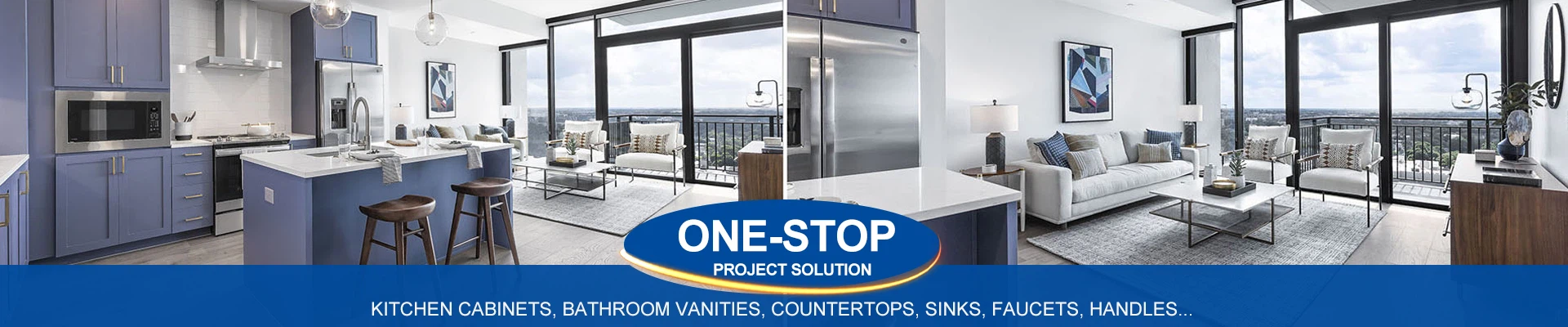


Dark Cabinets Granite Countertops
Color: Customized
Material: Granite or Quartz
Size: Customized
Application: Kitchen, Bathroom
Service: OEM & ODM
Sample: Available
Description
Technical Parameters
dark cabinets granite countertops

Dark Cabinets Granite Countertops: Where Elegance Meets Endurance
Crafted for discerning homeowners and designers, our Dark Cabinets Granite Countertops collection merges geological resilience with sophisticated aesthetics. Designed to transform kitchens and bathrooms into timeless sanctuaries, each slab pairs the dramatic depth of dark cabinetry with granite's natural artistry.
Standard Sizes & Custom Flexibility
Kitchen Countertops:
Common Dimensions: 96" x 36", 72" x 36", 78" x 25.5" (Undermount sink cutouts included).
Thickness: 2 cm (¾") for seamless integration, or 3 cm (1¼") for bold, waterfall-edge statements.
Vanity Tops:
Single Sink: 37" x 22", 49" x 22"
Double Sink: 61" x 22".
Edge Profiles: Choose from classic Full Bullnose, modern Flat Eased, or luxurious Dupont Double edges.
Core Product Advantages
Unrivaled Durability:
Heat & Scratch Resistance: Withstands temperatures up to 1,200°F and ranks 6–7 on the Mohs scale-resisting knives, appliances, and daily wear.
Stain & Bacteria Resistance: Non-porous when sealed with solvent-based impregnators (e.g., Tenax Hydrex), blocking liquids and microbial growth.
Design Versatility:
Contrast Mastery: Light granite countertops (e.g., River White, Uba Tuba) create striking visual contrast against dark cabinets, amplifying space perception.
Texture & Pattern: Granite's natural veining-quartz flecks, feldspar streams-adds organic drama to minimalist or ornate settings.
Low Maintenance:
Daily cleaning requires only pH-neutral soap and water; reseal every 3–5 years using the water-bead test.
Ideal Applications & Spaces
| Setting | Recommended Pairing | Design Impact |
|---|---|---|
| Luxury Kitchens | Midnight Black cabinets + White Ice granite | Creates a high-contrast, gallery-like aesthetic. |
| Modern Bathrooms | Charcoal cabinets + Baltic Brown granite | Warths up minimalist spaces with earthy textures. |
| Open-Plan Homes | Graphite cabinets + River White granite | Reflects light to enhance spatial flow. |
Space Optimization:
Small Kitchens: Light granite countertops (e.g., Moon White) + dark lower cabinets visually expand cramped areas.
High-Traffic Zones: Granite's durability suits homes with children or frequent entertaining.
Design Philosophy: The "Dark Matter" Aesthetic
Our collection embraces Dark Matter Design-a fusion of shadow, light, and texture that evokes cosmic elegance. Inspired by Guizhuang Wood Industry's "Deep Starry Sky" series, this philosophy leverages:
Contrast Dynamics: Dark cabinets anchor spaces like night skies, while granite countertops emulate starlight or planetary surfaces.
Tactile Layers: Matte finishes absorb light for depth; polished granite reflects it, creating interstellar shimmer.
Organic Minimalism: Unfussy lines let natural stone patterns command attention, reducing visual clutter.
Pairing Rules for Maximum Impact
Color Harmony:
Warm Tones: Pair espresso cabinets with gold-veined granite (e.g., Giallo Ornamental) for rustic warmth.
Cool Tones: Jet-black cabinets + blue-gray granite (e.g., Blue Pearl) enhance contemporary sleekness.
Material Synergy:
Backsplashes: Subway tiles in cream or steel mirror granite undertones.
Flooring: Light oak or porcelain tiles balance dark overhead masses.
Lighting Integration:
Undercabinet LEDs: Highlight granite's crystalline texture while counteracting shadow.
Pendant Lights: Brass or chrome fixtures amplify metallic flecks in stone.
Hardware Accents:
Matte black pulls on charcoal cabinets for cohesion; brass knobs on ebony cabinets for vintage contrast.
Technical Specifications
Material Sourcing: Granite quarried from Norway (Blue Pearl), India (Black Galaxy), and Brazil (Uba Tuba).
Eco-Conscious: Low-VOC sealants and sustainable quarrying practices.
Warranty: 15-year guarantee against structural flaws.
Why Choose This Combination?
Resale Value Boost: Dark cabinet-granite pairings increase home value by ~70% for luxury buyers.
Timelessness: Unlike trends, this duo transcends eras-proven by its dominance in estates and boutique hotels.
Custom Workflow: From templating to installation, our process ensures seams, cutouts, and edges align perfectly with your vision.
"Dark cabinets and granite countertops aren't just surfaces-they're a gravitational force that centers design, function, and legacy."
Explore our gallery or request samples-transform spaces with the interplay of shadow and stone. For trade inquiries: info@minofurnishings.com
does granite countertops need to be sealed

Yes, granite countertops absolutely need to be sealed to maintain their durability, appearance, and hygiene. Here's a detailed breakdown based on industry standards and expert guidelines:
Why Sealing is Necessary
Porosity of Granite:
Granite is a natural stone with microscopic pores that can absorb liquids (water, oils, acidic substances), leading to stains, etching, and bacterial growth.
Protection Against Damage:
Sealing creates an invisible barrier that repels spills, preventing permanent discoloration from common kitchen substances like wine, coffee, or cooking oils.
Hygiene Maintenance:
Unsealed granite harbors bacteria and mold in its pores. Sealants block microbial growth, ensuring a food-safe surface.
How Often to Seal
The resealing frequency depends on:
Granite Type: Denser stones (e.g., Absolute Black) may need sealing every 3–5 years, while lighter/porous varieties (e.g., White Granite) require it every 1–2 years.
Usage: High-traffic kitchens need more frequent sealing (every 1–2 years) vs. low-use bathrooms (every 3 years).
Sealer Type:
Penetrating Sealers: Last 3–5 years; soak into pores for deep protection without altering appearance.
Topical Sealers: Last 6–12 months; form a surface layer but may peel or alter texture.
Test for Resealing Need
Sprinkle water on the surface. If it beads up, the seal is intact. If it soaks in within 10–15 minutes, reseal immediately
Benefits of Sealing
Stain Prevention: Blocks oil, juice, and cosmetic spills from penetrating.
Enhanced Longevity: Reduces risk of etching, cracking, and bacterial damage.
Easier Maintenance: Sealed surfaces wipe clean effortlessly with pH-neutral soap and water.
Preserved Aesthetics: Maintains the stone's natural shine and color vibrancy.
Sealing Process: Best Practices
Clean Thoroughly: Use a pH-neutral cleaner (no vinegar or bleach!) and let the countertop dry completely.
Apply Sealant:
Use a lint-free cloth to spread penetrating sealer in circular motions.
Wait 10–15 minutes for absorption, then wipe off excess.
Cure Properly: Avoid water contact for 24–48 hours.
Critical Tip: Always test sealants in an inconspicuous area first to check for discoloration
Risks of Not Sealing
Permanent Staining: Unsealed granite absorbs pigments from spills (e.g., turmeric, red wine).
Bacterial Contamination: Pores trap moisture, promoting mold and E. coli growth.
Etching: Acidic substances (lemon juice, vinegar) can dull the surface.
Maintenance Beyond Sealing
Daily Care: Wipe spills immediately; use trivets for hot pans and cutting boards for food prep.
Annual Check: Conduct the water-bead test yearly to monitor sealant integrity.
Professional Help: For deep stains or damage, consult stone restoration experts.
Key Takeaway
Sealing granite countertops is non-negotiable for preserving their function and beauty. While resealing every 1–3 years is typical, always let the stone's response to liquids guide your schedule. Investing in a high-quality penetrating sealer (e.g., Tenax Hydrex) ensures decades of stain-free elegance
acrylic vs granite countertops

Here's a detailed comparison of acrylic vs. granite countertops, synthesized from industry sources to highlight key differences in functionality, aesthetics, maintenance, and suitability:
Material Composition & Manufacturing
| Attribute | Acrylic Countertops | Granite Countertops |
|---|---|---|
| Material | Synthetic blend of acrylic resin + minerals | Natural igneous rock (quartz, feldspar) |
| Production | Factory-molded; seamless integration | Quarried, cut, and polished from solid slabs |
| Eco-Impact | Lower carbon footprint | Resource-intensive mining/quarrying |
Performance & Durability
| Factor | Acrylic | Granite |
|---|---|---|
| Heat Resistance | ❌ Low (max 200°F); trivets required | ✅ High (withstands 1200°F) |
| Scratch Resistance | ⚠️ Moderate (repairable via sanding) | ✅ High (Mohs 6-7) |
| Stain/Bacteria | ✅ Non-porous; no sealing needed | ⚠️ Porous; requires sealing |
| Impact Strength | ❌ Prone to dents from heavy objects | ✅ Resilient against cracks/chips |
Maintenance & Longevity
Acrylic:
Daily cleaning: Mild soap + water; avoid abrasives.
Scratches: Repaired with sanding/polishing.
Lifespan: 10–15 years; may discolor under UV light.
Granite:
Daily cleaning: pH-neutral cleaners only.
Sealing: Required every 1–5 years (water-bead test).
Lifespan: 50+ years with proper care.
Aesthetics & Design Flexibility
| Feature | Acrylic | Granite |
|---|---|---|
| Appearance | Uniform colors/patterns; mimics stone | Unique natural veining; no two slabs alike |
| Customization | ✅ High (seamless sinks, curved edges) | ❌ Limited (dependent on slab size) |
| Edge Profiles | Custom shapes (e.g., waterfall, beveled) | Traditional (bullnose, ogee) |
Cost Comparison
| Expense | Acrylic | Granite |
|---|---|---|
| Material | 40–80/sq. ft. | 50–200+/sq. ft. |
| Installation | ✅ DIY-friendly (lightweight) | ❌ Professional only (heavy slabs) |
| Long-Term Cost | Lower upfront; may need replacement sooner | Higher upfront; adds 70%+ home value |
Best Applications
Choose Acrylic For:
Modern kitchens/bathrooms with integrated sinks.
Budget renovations; DIY projects.
Spaces requiring hygienic surfaces (hospitals, labs).
Choose Granite For:
High-end kitchens; luxury estates.
Outdoor kitchens (UV/heat resistance).
Commercial spaces (hotels, restaurants).
Key Limitations
Acrylic:
Susceptible to heat damage and scratches.
Limited resale value boost.
Granite:
Weight requires reinforced cabinets.
Radon concerns (test slabs pre-installation).
Recommendations by User Profile
Homeowners on a Budget: Acrylic (cost-effective + easy repairs).
Luxury/Long-Term Investment: Granite (timeless appeal + durability).
Design Enthusiasts: Acrylic for avant-garde shapes; granite for natural elegance.
Hot Tags: dark cabinets granite countertops, China dark cabinets granite countertops manufacturers, suppliers
Previous
White Cabinets Granite CountertopSend Inquiry


