

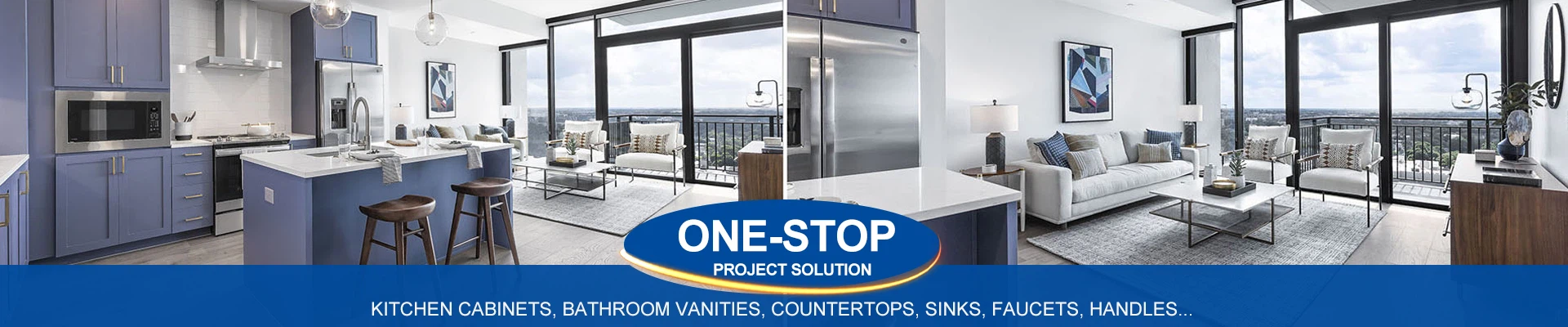
Kitchen Cabinet Colors 2025
Oct 12, 2025
Leave a message
kitchen cabinet colors 2025

Kitchen cabinet colors for 2025 are all about creating warmth, personality, and a connection to nature. We're moving away from the cool, stark whites and grays of the past decade toward more organic, expressive, and soothing palettes.
Here are the top kitchen cabinet color trends for 2025, complete with specific shades and how to use them.
The Top 5 Kitchen Cabinet Color Trends for 2025
1. Warm, Earthy Neutrals (The New Standard)
Forget cold grays. The new neutral is warm, soft, and inviting. These colors create a cozy, grounded feeling.
Key Colors: Creams, beiges, greiges (gray + beige), and warm taupes.
Why it's Trending: These hues offer a timeless, flexible backdrop that feels both fresh and comforting. They pair beautifully with natural wood tones and stone.
Specific Shades to Try:
Benjamin Moore White Dove (OC-17): A warm, soft white that avoids looking sterile.
Sherwin-Williams Shoji White (SW 7042): A delicate, airy white with warm undertones.
Sherwin-Williams Accessible Beige (SW 7036): A perfect, balanced greige.
Benjamin Moore Edgecomb Gray (HC-173): A light gray with strong warm undertones.
2. Nature-Inspired Greens
Green continues to be a powerhouse, evolving into softer, more muted shades that mimic the natural world.
Key Colors: Sage, olive, moss, and other muted, earthy greens.
Why it's Trending: Green promotes a sense of calm and well-being, bringing the serenity of nature indoors. It's incredibly versatile, working in everything from farmhouse to modern styles.
Specific Shades to Try:
Sherwin-Williams Evergreen Fog (SW 9130): A sophisticated, calming gray-green (Sherwin-Williams' 2022 Color of the Year, still going strong).
Benjamin Moore Saybrook Sage (HC-149): A beautiful, historical gray-green.
Behr Breezeway (MQ3-21): A light, airy sage that feels fresh and clean.
3. Rich, Moody Hues
Darker, dramatic cabinets are becoming a bold choice for creating intimate, luxurious spaces, especially in larger kitchens or those with great natural light.
Key Colors: Navy blue, charcoal, deep green, and even black.
Why it's Trending: These colors add depth, drama, and a high-end, custom feel. They are often used on lower cabinets or islands to ground the space.
Specific Shades to Try:
Sherwin-Williams Naval (SW 6244): A timeless, rich navy.
Benjamin Moore Hale Navy (HC-154): A classic deep blue with gray undertones.
Sherwin-Williams Iron Ore (SW 7069): A soft, almost charcoal black that is less severe than true black.
Benjamin Moore Black Forest Green (HC-187): A deep, luxurious green that reads as almost black in low light.
4. Warm Wood Tones (The Return of Natural Grain)
Stained wood cabinets are making a major comeback, but in warmer, lighter, and more natural finishes.
Key Colors: Light oak, walnut, maple, and other woods with their natural grain prominently visible.
Why it's Trending: This trend emphasizes authenticity, texture, and craftsmanship. It adds instant warmth and organic character that paint cannot replicate.
How to Use It: Perfect for a full kitchen or as an accent on an island paired with painted perimeter cabinets.
5. The Two-Tone Kitchen (Evolving Trend)
The two-tone kitchen is not going away; it's just getting more sophisticated. The focus is on tonal contrast and material mixing.
Popular 2025 Combinations:
Warm White Uppers + Wood-Tone Lowers: The ultimate warm and organic combination.
Light Green Uppers + Dark Green Lowers: A monochromatic scheme that adds depth.
Neutral Perimeter + Bold Colored Island: A colored island (in blue or green) remains a fantastic way to add a focal point.
Pro Tips for Choosing Your 2025 Cabinet Color
Consider Your Fixed Elements: Choose your cabinet color based on your existing countertops, flooring, and backsplash. Your cabinets should complement them.
Lighting is Everything: Always get large samples and observe them in your kitchen at different times of day. A color can look completely different under artificial light versus natural light.
Test, Don't Guess: Paint a large poster board with your top 2-3 color choices and live with them for a few days before committing.
Think About Hardware: The right hardware (knobs and pulls) can define the style. Warm metals like brass and unlacquered nickel pair beautifully with 2025's warm palettes.
Conclusion: The Overall Vibe for 2025
The overarching theme for kitchen cabinets in 2025 is "Warm and Welcoming." We are embracing colors that feel lived-in, personal, and connected to the natural world. Whether you choose a soft cream, a soothing sage, or a dramatic navy, the goal is to create a kitchen that feels like the heart of the home-a place of comfort and connection.
Final Recommendation: Don't feel you must follow a trend slavishly. The best color for your kitchen is one that you love and that makes you happy every time you walk into the room. Use these trends as inspiration to find your perfect shade.
kitchen cabinet depth standard

Kitchen cabinet depth is a critical measurement that affects both functionality and the overall feel of your kitchen. The standards are designed around ergonomics, appliance sizes, and building codes.
Here is a detailed breakdown of standard kitchen cabinet depths.
At-a-Glance: Standard Cabinet Depths
Cabinet Type | Standard Depth (Inches) | Standard Depth (cm) | Notes |
|---|---|---|---|
Base Cabinets | 24 inches | 61 cm | Includes the countertop overhang. |
Wall (Upper) Cabinets | 12 inches | 30.5 cm | Standard depth for most uppers. |
Tall Cabinets (Pantry) | 24 inches | 61 cm | Matches base cabinet depth for a flush look. |
Detailed Breakdown by Cabinet Type
1. Base Cabinet Depth: 24 Inches
Why 24 inches? This is the universal standard. It's designed to provide sufficient workspace and to accommodate most major appliances (like dishwashers and ranges) that are built to fit within this depth.
What's included: The cabinet box itself is typically 22.5 inches deep. The additional 1.5 inches accounts for the countertop overhang, which brings the total depth to 24 inches. This overhang prevents spills from dripping directly onto the cabinet fronts.
2. Wall (Upper) Cabinet Depth: 12 Inches
Why 12 inches? This shallower depth serves two key purposes:
Ergonomics and Safety: It prevents you from hitting your head on the cabinets when working at the counter below.
Accessibility: It allows you to easily reach items at the back of the countertop.
3. Tall Cabinet / Pantry Depth: 24 Inches
Why 24 inches? Tall cabinets, including pantry units and those housing ovens or refrigerators, are almost always 24 inches deep to align flush with the base cabinets, creating a clean, uniform line.
Important Exceptions & Variations
While the 24" base and 12" upper are the standards, you will encounter common variations.
Cabinet Type | Depth Variation | Reason/Purpose |
|---|---|---|
Deep Upper Cabinets | 13" - 15" | Extra storage for larger items like dinner plates. |
Appliance Garage Uppers | 15" - 18" | Designed to hide small appliances like mixers and toasters. |
Shallow Base Cabinets | 12" - 18" | Used in small kitchens, islands, or peninsulas to save space. |
Vanity Base Cabinets | 21 inches | Standard for bathrooms, not kitchens. |
Pro Tips & Related Measurements
The "Toe Kick" Depth: The very bottom of base cabinets has a recessed area called the toe kick. It is typically 3 inches deep and 3.5 to 4 inches high. This allows you to stand close to the counter comfortably.
Countertop Overhang: The standard overhang beyond the cabinet is 1.5 inches. For islands with seating, the overhang is typically 12 inches to allow for knee space.
Always Confirm Before Ordering: While these are industry standards, always double-check the exact dimensions with your cabinet manufacturer or designer before finalizing an order. European or custom cabinets can sometimes vary.
Conclusion
Sticking to standard cabinet depths ensures compatibility with appliances, provides a comfortable and functional workspace, and simplifies the installation process.
Remember: 24 inches for base cabinets, 12 inches for uppers.
If you are designing a custom kitchen, you can deviate from these standards, but it's crucial to understand the ergonomic and functional reasons they exist in the first place.
kitchen cabinet ideas for corners

Kitchen cabinet corners are notoriously tricky spaces that can easily become black holes of lost storage. However, with the right design ideas, you can transform them into highly functional and accessible areas.
Here is a comprehensive guide to the best kitchen cabinet ideas for corners, from simple solutions to high-tech options.
The Goal: Maximize Accessibility & Storage
The main challenge with corners is the deep, hard-to-reach space. The best solutions bring the contents out to you.
Top Corner Cabinet Solutions
1. Lazy Susan (The Classic Solution)
This is the most common and cost-effective solution. A rotating tray makes items in the back accessible.
Types:
Diagonal/Wire Susan: Fits into a corner cabinet with a diagonal front. Good for lighter items.
Blind Corner Susan: Fits into a standard blind corner cabinet (see below).
Best for: Budget-friendly updates, storing pots, pans, and dry goods.
Pros: Affordable, easy to install, maximizes basic accessibility.
Cons: Can have "dead space" around the edges, items can fall off, not ideal for very heavy items.
2. Blind Corner Cabinets with a Pull-Out System (The Best Overall Solution)
This is a more advanced and highly efficient system. You open the door on one side and pull out a large tray that rotates and brings the contents into the open.
How it works: A large, sturdy tray is mounted on rails. When you pull it out, it swings the contents from the corner into the center of the kitchen.
Best for: Homeowners who want the most functional, no-waste space solution.
Pros: Utilizes 100% of the corner space, provides full visibility and access, great for heavy pots and small appliances.
Cons: More expensive, requires specific cabinet dimensions.
(A simple diagram showing the pull-out mechanism would be ideal here.)
3. Diagonal Corner Cabinets (The Aesthetic Choice)
Instead of a 90-degree interior, the cabinet front is cut at a 45-degree angle, creating a diagonal front. This is often paired with a Lazy Susan.
Best for: Creating a more open, custom look. Provides easier access than a standard blind corner.
Pros: Looks more intentional and high-end, easier to access than a blind corner.
Cons: Requires more floor space, the pointed corners can be less functional for some items.
4. Magic Corner or Super Susan (The High-End Solution)
This is a premium version of the pull-out system. It typically involves a complex mechanism with multiple trays that glide out smoothly, ensuring every inch is usable.
Best for: Luxury kitchens where budget is not a primary concern and maximum functionality is desired.
Pros: Extremely smooth operation, maximizes every cubic inch of space, very durable.
Cons: Highest cost, requires professional installation.
5. Simple Open Corner Shelving (The Modern/Minimalist Approach)
Forgo cabinets altogether and use the corner for open shelving. This is great for displaying dishes or storing frequently used items.
Best for: Modern, Scandinavian, or industrial-style kitchens. People who are tidy!
Pros: Completely eliminates the access problem, makes the kitchen feel more open, cost-effective.
Cons: Items are on display (can look cluttered if not organized), requires dusting.
6. Appliance Garage (The Specialty Nook)
A corner is a perfect place to create a dedicated "garage" for small appliances like a stand mixer, toaster, or coffee maker.
How it works: A cabinet with a roll-up or hinged door that hides appliances while keeping them easily accessible on the countertop.
Best for: Keeping countertops clutter-free.
7. Pull-Out Corner Drawers (The Innovative Solution)
A system of drawers that are specially designed to fit into the corner angle. When opened, they provide full access to their contents.
Best for: A very clean, integrated look. Excellent for storing smaller items.
Pros: Drawer organization is easy to see, smooth operation.
Cons: May not utilize the very deepest part of the corner as effectively as a rotating system.
How to Choose the Right Corner Solution
If you value... | Choose this solution... |
|---|---|
Budget-Friendliness | Lazy Susan |
Maximum Functionality | Blind Corner Cabinet with a Pull-Out System |
Aesthetic Appeal | Diagonal Corner Cabinet |
Open, Airy Feel | Open Corner Shelving |
High-End Luxury | Magic Corner / Super Susan |
Hiding Appliances | Appliance Garage |
DIY vs. Professional Installation
DIY-Friendly: Installing a basic Lazy Susan is a very manageable DIY project. Kits are available at any home improvement store.
Professional Recommended: Complex pull-out systems like a Magic Corner should be installed by a professional to ensure proper function and alignment.
Conclusion & Final Recommendation
For most homeowners, the single best solution for a kitchen corner is a Blind Corner Cabinet with a Pull-Out System. It offers the perfect balance of functionality, space utilization, and relative affordability.
Before you decide, ask yourself these questions:
What is my budget?
What will I primarily store in this corner? (Lightweight items vs. heavy pots)
How important is ease of access to me?
What is the style of my kitchen?
Pro Tip: If you're designing a new kitchen or undergoing a full remodel, discuss corner solutions with your cabinet designer early in the process. The cabinet dimensions and configuration will determine which solutions are possible. For an existing kitchen, a Lazy Susan or a retrofit pull-out organizer are your best bets.