

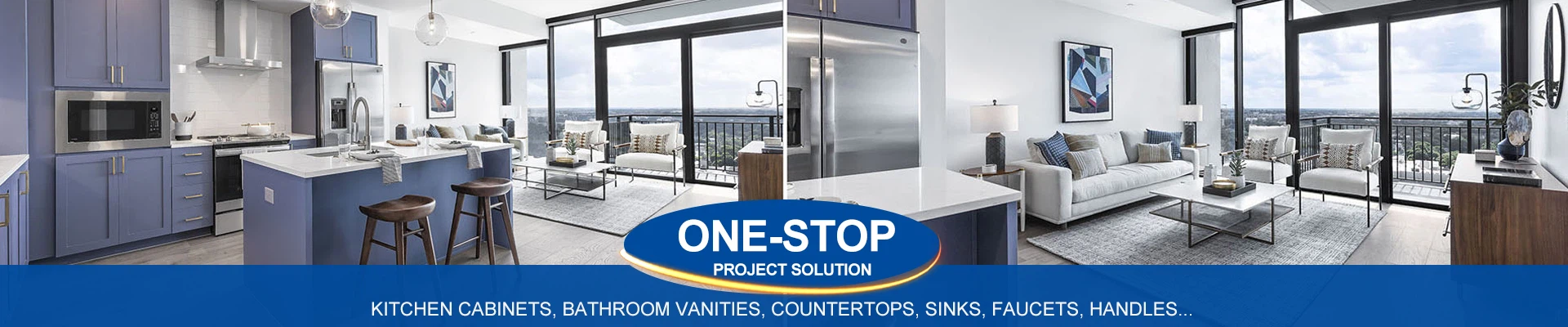
Thermofoil Cabinets Multifamily
Jul 08, 2025
Leave a message
thermofoil cabinets multifamily

Based on a synthesis of the search results, here's a detailed analysis of thermofoil cabinets in multifamily housing, including their benefits, limitations, and implementation considerations:
✅ Key Benefits of Thermofoil Cabinets for Multifamily Properties
Cost Efficiency:
Ideal for large-scale projects due to lower material and installation costs (30–50% cheaper than solid wood or laminate) .
Suppliers like Republic Elite offer turnkey solutions including design, delivery, and installation, streamlining project timelines .
Durability & Low Maintenance:
Moisture-resistant surfaces prevent warping in kitchens and bathrooms, critical for high-turnover rental units .
Easy cleaning with mild soap/water reduces maintenance costs and tenant complaints .
Design Flexibility:
Available in 85+ colors/finishes (e.g., high-gloss white, wood grains, metallics) to match diverse unit aesthetics .
Brands like CamTech use SURFUSION technology for seamless color matching across doors, laminates, and edge banding .
Regulatory Compliance:
Meet low-VOC standards (e.g., CARB NAF), ensuring indoor air quality compliance for multifamily regulations .
Rapid Installation:
Pre-fabricated designs from suppliers (e.g., Epic Industries) enable quick installation, minimizing unit downtime .
⚠️ Limitations and Risk Mitigation
| Challenge | Solution for Multifamily Settings |
|---|---|
| Heat Sensitivity | Avoid placement near ovens/stoves; use heat shields (e.g., aluminum foil backsplashes) |
| Scratch/Delamination | Specify high-pressure edges (e.g., CamTech's 5-piece doors); avoid abrasive cleaners |
| Perceived "Cheap" Aesthetic | Pair with quartz countertops (e.g., Catalina Quartz) for upscale appeal |
| Irreparable Damage | Stock modular replacement doors for quick fixes between tenancies |
📊 Supplier Comparison for Multifamily Projects
| Supplier | Key Offerings | Multifamily Focus |
|---|---|---|
| Republic Elite | Turnkey cabinets, countertops, closets; thermofoil/melamine finishes | Full project management & installation |
| CamTech | 5-piece thermofoil doors; SURFUSION color-matching tech; vertical-grade laminates | High customization for luxury units |
| Epic Industries | MDF/PVC thermofoil doors; modern/classic designs (e.g., Milano, Shaker styles) | Cost-effective bulk orders |
💡 Implementation Best Practices
Material Selection:
Use 7–9mm MDF cores for impact resistance and 0.15–0.5mm PVC films for scratch protection .
Opt for embossed wood-grain finishes to mimic higher-end materials .
Hybrid Material Strategy:
Deploy thermofoil for wet zones (sink bases, bathroom vanities) and laminate/wood for uppers .
Maintenance Protocols:
Provide tenants with cleaning guidelines (e.g., no steam cleaners, abrasive pads) .
Install self-adhesive aluminum foil protectors near stoves to prevent heat damage .
Regulatory Alignment:
Ensure products comply with local fire codes (e.g., Class A fire-rated foils) and accessibility standards .
🌟 Why Developers Prefer Thermofoil for Multifamily Units
Speed-to-Market: Reduced installation time vs. custom wood cabinets .
Economies of Scale: Bulk pricing from suppliers like Epic Industries lowers per-unit costs .
Tenant Appeal: Modern finishes attract renters; quartz countertop pairings elevate perceived value .
💎 Pro Tip: For luxury multifamily projects, combine thermofoil lowers with quartz countertops and glass-front uppers to balance cost, durability, and aesthetic appeal .
Thermofoil cabinets offer multifamily developers a pragmatic blend of affordability, durability, and design flexibility-ideal for high-occupancy environments where cost control and low maintenance are paramount.
what is thermofoil cabinet finish

Thermofoil cabinet finish is a synthetic surfacing material used primarily on kitchen and bathroom cabinets. It consists of a thin layer of PVC or vinyl film that is heat-fused under vacuum pressure to a medium-density fiberboard (MDF) core []. This process creates a seamless, non-porous surface that mimics painted wood, high-gloss finishes, or faux wood grains .
🔧 Key Characteristics
Material Composition & Manufacturing:
Vinyl Film: A flexible PVC layer (0.1–0.5 mm thick) laminated to MDF using heat and adhesive-free vacuum pressure [].
MDF Core: Provides a smooth, uniform base but is vulnerable to water damage if the film is compromised [].
Aesthetic Features:
Seamless Wrapping: Covers all surfaces (front, edges, grooves) without visible seams [].
Design Versatility: Available in 85+ finishes, including solid colors (e.g., white, gray), high-gloss, matte, wood grains, and metallic effects [].
Modern Look: Delivers a sleek, minimalist appearance ideal for contemporary kitchens [].
Performance Properties:
Moisture Resistance: Non-porous surface repels water, stains, and bacteria, making it ideal for humid areas like sinks [].
Easy Maintenance: Cleanable with mild soap and water; no polishing or sealing required [].
Heat Sensitivity: Prone to delamination or bubbling near ovens (>150°C), dishwashers, or steam sources [].
Scratch Vulnerability: Surface scratches easily; deep damage exposes MDF to moisture [].
Durability & Lifespan:
Lifespan: Typically 10–15 years (shorter than wood's 30–50 years) [].
Irreparable Damage: Peeling or bubbling requires full door replacement [].
⚖️ Pros vs. Cons
| Advantages | Disadvantages |
|---|---|
| ✅ Budget-friendly (100–350/foot) [] | ❌ Heat-vulnerable (delaminates near ovens) [] |
| ✅ Low maintenance (wipe-clean surface) [] | ❌ Short lifespan (10–15 years) [] |
| ✅ Moisture/stain-resistant [] | ❌ "Plastic" aesthetic lacks wood's warmth [] |
| ✅ Lightweight & easy installation [] | ❌ Not refinishable; damage = replacement [] |
🛠️ Ideal Applications
Best For: Rental properties, budget remodels, moisture-prone zones (away from heat), and modern kitchens [].
Avoid: Areas near ovens, dishwashers, or high-traffic zones requiring impact resistance [].
♻️ Sustainability Considerations
Eco-Impact: Uses MDF (recycled wood fibers) but contains PVC plastic; recyclable but less eco-friendly than FSC-certified wood [].
Waste Concerns: Non-repairable nature contributes to "throwaway culture" [].
💡 Maintenance Tips
Use heat shields (e.g., stainless steel backsplashes) near stoves [].
Clean grease promptly to prevent yellowing [].
Avoid abrasive cleaners to preserve the film [].
Thermofoil offers an affordable, sleek solution for modern or temporary spaces but trades longevity and repairability for cost savings. For heat-prone areas, consider high-pressure laminate (HPL) or painted wood as alternatives .
wood vs thermofoil cabinets

Based on a comprehensive analysis of the search results, here's a detailed comparison of wood cabinets vs. thermofoil cabinets across critical factors like cost, durability, aesthetics, maintenance, and suitability:
⚙️ 1. Material Composition & Manufacturing
Wood Cabinets:
Made from solid hardwood (e.g., oak, maple, cherry) or plywood with natural veneers. Panels are cut, joined, and finished with stains or paints .
Key trait: Organic grain patterns and structural integrity from solid wood construction.
Thermofoil Cabinets:
Composed of MDF (Medium-Density Fiberboard) covered with a PVC vinyl film fused under heat and vacuum pressure. Creates a seamless, non-porous surface .
Key trait: Uniform appearance mimicking painted wood or solid colors (e.g., high-gloss white, wood grains).
💰 2. Cost & Value Comparison
| Factor | Wood Cabinets | Thermofoil Cabinets |
|---|---|---|
| Upfront Cost | $500+ per linear foot (premium hardwoods) | 100–350 per linear foot (budget-friendly) |
| Long-Term Value | High resale value; lasts 30–50+ years | Lower resale value; lifespan 10–15 years |
| Cost-Effectiveness | Higher initial investment but cost-effective over decades | Ideal for short-term savings; frequent replacement needed |
🛡️ 3. Durability & Lifespan
Wood Cabinets:
Pros: Extremely durable-resists dents, scratches, and heavy use. Can be sanded/refinished multiple times to repair damage .
Cons: Prone to warping/swelling in high humidity; requires sealing to prevent moisture damage .
Thermofoil Cabinets:
Pros: Resists moisture, stains, and warping (ideal for humid areas) .
Cons: Delaminates or bubbles near heat sources (ovens, dishwashers); scratches expose MDF core; irreparable damage .
🧼 4. Maintenance & Care
| Aspect | Wood Cabinets | Thermofoil Cabinets |
|---|---|---|
| Cleaning | Mild soap/water; periodic polishing/sealing | Easy wipe-down (no polishing needed) |
| Sensitivity | Avoid harsh chemicals; sensitive to water pools | Avoid abrasive cleaners, heat, and steam |
| Repairs | Fixable (sanding/refinishing) | Full door replacement required for damage |
🎨 5. Aesthetics & Design Flexibility
Wood Cabinets:
Timeless warmth with natural grain variations; suits traditional, rustic, or modern styles .
Highly customizable: Can be stained, painted, or carved into intricate profiles .
Thermofoil Cabinets:
Sleek, modern look with uniform finishes (85+ colors/patterns) .
Limited to slab/shaker styles; lacks depth and cannot mimic intricate wood details .
♻️ 6. Sustainability & Eco-Impact
Wood Cabinets:
Eco-friendly if FSC-certified (sustainably sourced); biodegradable and long-lasting .
Thermofoil Cabinets:
Uses MDF (recycled wood fibers) but contains PVC plastic; recyclable but less eco-friendly .
🏠 7. Best Use Cases
| Scenario | Recommended Material | Why? |
|---|---|---|
| Luxury/Heirloom Kitchens | Wood | Timeless appeal, durability, and value retention |
| High-Humidity Zones | Thermofoil (away from heat) | Moisture resistance; avoids wood's warping risks |
| Budget Renovations/Rentals | Thermofoil | Low cost, easy maintenance, modern aesthetics |
| Heat-Prone Areas | Wood | Tolerates heat; won't delaminate like thermofoil |
⚖️ Quick Comparison Summary
| Factor | Winner | Key Reason |
|---|---|---|
| Durability | Wood ✅ | Refinishable; withstands decades of use |
| Cost Savings | Thermofoil ✅ | 50–70% cheaper upfront |
| Moisture Resistance | Thermofoil ✅ | Superior in humid climates (e.g., bathrooms) |
| Aesthetic Warmth | Wood ✅ | Natural beauty and customization |
| Low Maintenance | Thermofoil ✅ | No polishing or sealing needed |
💎 Recommendations
Choose Wood If:
You prioritize long-term value, natural aesthetics, and repairability .
Your kitchen has high heat exposure (e.g., near ovens) .
Choose Thermofoil If:
You need budget-friendly, low-maintenance cabinets for rentals or humid areas (away from heat) .
You prefer a modern, uniform look with extensive color options .
Hybrid Approach: Use thermofoil for lowers (moisture-prone sinks) and wood for uppers (heat-safe zones) to balance cost and durability .
🌟 Pro Tip: For thermofoil near ovens, install heat shields (stainless steel panels) to prevent delamination . For wood cabinets, apply water-resistant sealant annually to combat humidity .